Table of Contents
- Why Denver Is Perfect for Greenhouse Gardening
- Glass vs. Polycarbonate: What's Best for Colorado?
- Greenhouse Sizes for Denver Properties
- Essential Features for Colorado Greenhouses
- Greenhouse Placement on Your Denver Property
- Do You Need a Building Permit in Denver?
- What Can You Grow in a Denver Greenhouse?
- Heating Your Denver Greenhouse
- Cost Breakdown: What to Expect
- Why Professional Installation Matters in Colorado
- Choosing Your Greenhouse Supplier
- Questions to Ask Before Buying
- Making Your Decision
- Ready to Start Growing?
- FAQs
The Complete Guide to Buying a Greenhouse in Denver, Colorado
Published by South Table Sheds | Denver Greenhouse Experts
Buying a greenhouse in Denver requires understanding Colorado's unique climate challenges and opportunities. With 300 days of sunshine, intense UV radiation at 5,280 feet, and dramatic temperature swings, choosing the right greenhouse demands careful consideration. This comprehensive guide to buying a greenhouse will help you make an informed decision based on 17 years of installing greenhouses across the Front Range.
Why Denver Is Perfect for Greenhouse Gardening
Colorado's climate might seem harsh, but it's actually ideal for greenhouse growing:
The Advantages:
- Intense sunlight: At mile-high elevation, sunlight is 25% more intense than sea level—plants photosynthesize more efficiently
- Low humidity: Reduces mold, mildew, and pest problems common in humid climates
- Consistent sunny days: Minimal cloud cover means reliable solar heating
- Cool nights: Natural temperature drops help many vegetables produce better flavor and yields
- Extended season potential: Greenhouses can add 2-4 months to Denver's 150-day growing season
The Challenges:
- Late spring frosts (last frost often mid-May)
- Sudden temperature fluctuations (70°F to 20°F overnight)
- Intense afternoon sun can scorch plants without proper ventilation
- Hail storms during spring and summer
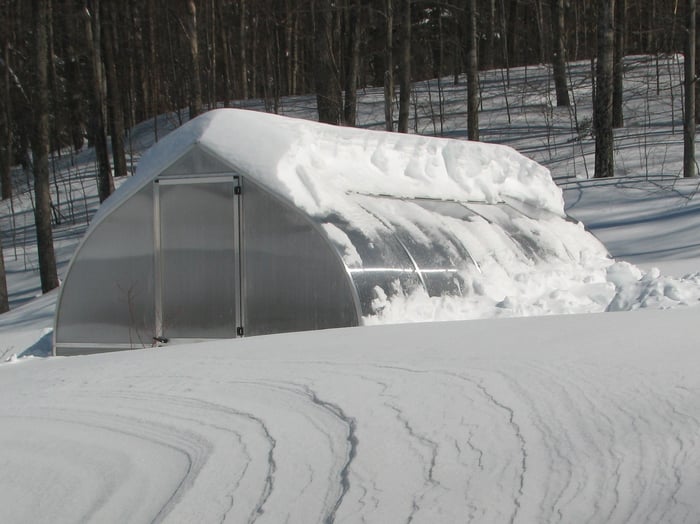
- Heavy wet snow in March and April
- Low humidity requires attentive watering
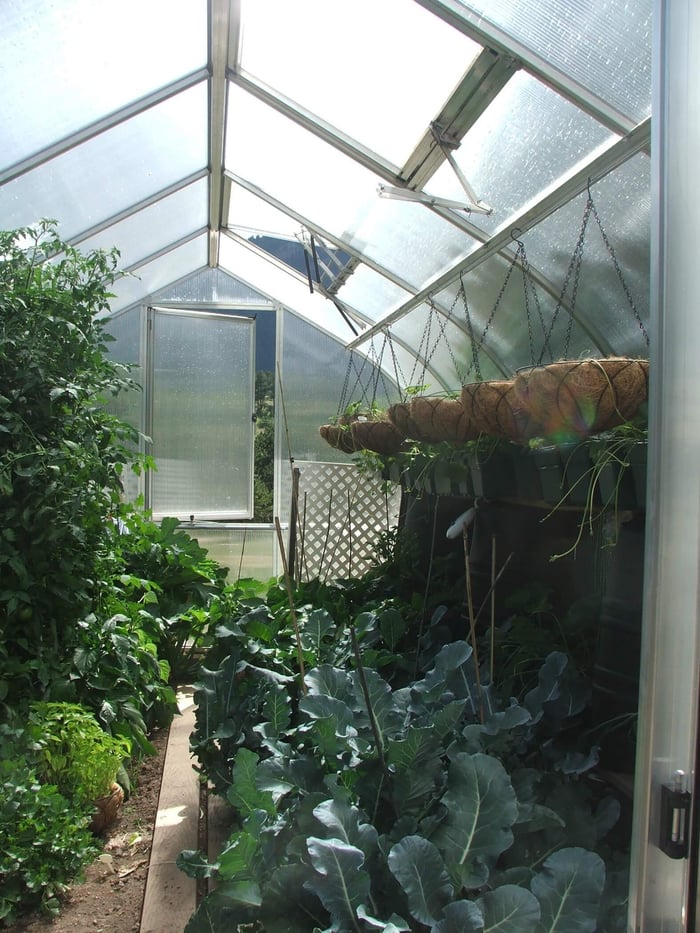 Glass vs. Polycarbonate: What's Best for Colorado?
When buying a greenhouse in Denver, your first major decision is choosing between polycarbonate and glass materials. Each has distinct advantages for Colorado's climate.
Polycarbonate Greenhouses
Best for: Year-round growing, weather durability, energy efficiency
Advantages in Colorado:
- Hail resistance: Twin-wall polycarbonate withstands hail impact that would shatter glass
- Better insulation: Traps heat during cold Denver nights (can be 10-15°F warmer than glass)
- Light diffusion: Reduces scorching from intense Colorado sun while maintaining excellent light transmission
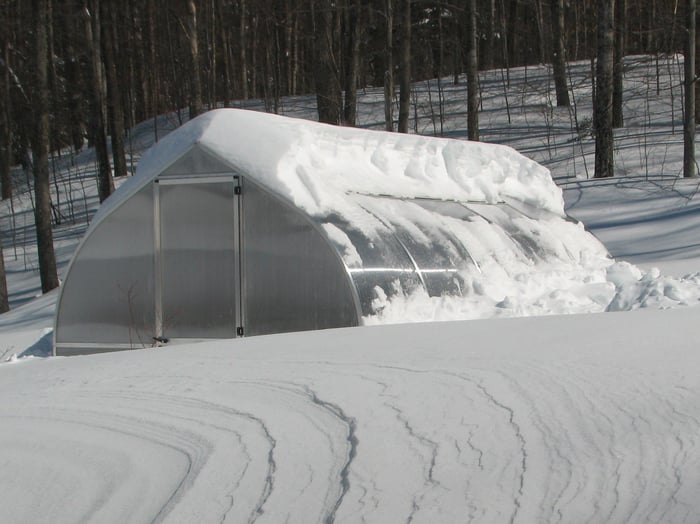
- Snow load strength: Flexes under snow weight without cracking
- UV protection: Protects plants from altitude-intensified UV radiation
- Durability: Lasts 10-20 years without yellowing or becoming brittle
Disadvantages:
- Less aesthetically traditional than glass
- Panels can scratch (though this rarely affects growing performance)
- Initial cost slightly higher than basic glass
Our recommendation: If you plan to grow year-round or want low-maintenance durability for Colorado weather, polycarbonate is your best choice.
Glass Greenhouses
Best for: Aesthetic appeal, maximum light transmission, spring-summer growing
Advantages in Colorado:
- Crystal clear visibility: Showcase your plants beautifully
- Maximum light: 90%+ light transmission vs. 80-85% for polycarbonate
- Classic appearance: Traditional greenhouse aesthetic
- Easy to clean: Simple to maintain clarity
- Scratch resistant: Glass doesn't scratch like polycarbonate
Disadvantages:
- Hail vulnerability: Tempered glass resists but can still break during severe hail
- Less insulation: Single-pane glass loses heat quickly during cold nights
- Replacement costs: Broken panes are expensive to replace
- Weight: Requires stronger foundations and framing
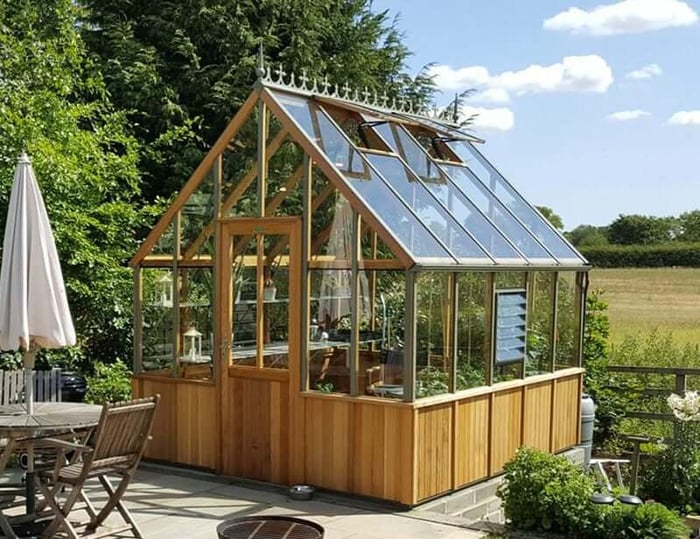
Our recommendation: Glass works beautifully for Denver, including cedar greenhouses with glass, such as a gardeners focused on spring-summer growing who want a showcase greenhouse and can accept hail risk.
Greenhouse Sizes for Denver Properties
Another critical factor when buying a greenhouse is determining the right size for your property and growing goals.
Starting Small: Cold Frames as an Entry Point
Not ready to invest in a full greenhouse? A polycarbonate cold frame offers Denver gardeners an affordable way to test the waters of season extension without the commitment. At under $250, cold frames let you start seeds weeks earlier, harden off seedlings, and protect fall crops from early frosts. Many experienced greenhouse owners started with a simple cold frame before upgrading , and still use them alongside their larger structures for overflow seedlings and hardening off plants.
Small Greenhouses (approx <100 sq ft)
Perfect for:
- Urban Denver lots with limited space
- Townhomes and condos (check HOA rules)
- Beginner greenhouse gardeners
- Seed starting and plant propagation
- Herb and microgreen production
What you can grow:Start 50-100+ seedlings, grow herbs year-round, produce salad greens through winter, overwinter tender perennials
Denver considerations: Most municipalities don't require permits under 120 sq ft, but verify local codes before buying a greenhouse.
Medium Greenhouses (approx 100sq ft - 150 sq ft)
Perfect for:
- Serious hobby gardeners
- Suburban Denver properties
- Family vegetable production
- Year-round growing operations
What you can grow: Supplement your family's vegetable needs year-round, start all your garden plants from seed, grow tomatoes and peppers through fall, maintain herb gardens
Denver considerations: May require permits and setback compliance in some areas
Large Greenhouses (approx 150+ sq ft)
Perfect for:
- Professional growing operations
- Large suburban or rural properties
- Market gardening or plant sales
- Serious year-round production
What you can grow: Full commercial production, extensive variety trials, substantial year-round vegetable production for family and sale
Denver considerations: Usually requires permits, building inspections, and utility considerations
Market gardeners and serious growers should consider an extra large polycarbonate greenhouse like the RIGA XL series, which offers up to 413 square feet of growing space with commercial-grade 16mm triple-wall insulation.
Essential Features for Colorado Greenhouses
Ventilation (Critical!)
Colorado's intense sun can push interior greenhouse temperatures above 100°F even on 60°F spring days. Proper ventilation is non-negotiable.
Must-haves:
- Roof vents: Allow hot air to escape naturally (hot air rises)
- Side vents or louvers: Provide cross-ventilation and fresh air intake
- Automatic vent openers: Wax-cylinder openers that work without electricity—essential when you're away
Denver tip: Plan for 15-20% of floor space in ventilation area. More is better for our intense summer sun.
Foundation Options
Concrete pad:
- Best for permanent installations
- Provides maximum stability for wind resistance
- Required for larger structures (10x12+)
- Cost: $500-$2,000 depending on size
Gravel base:
- Good for smaller greenhouses
- Provides drainage and stability
- Can be done DIY
- Cost: $100-$300
Ground anchors:
- Suitable for temporary or seasonal setups
- Quick installation
- May not meet Denver wind codes for permanent structures
Door Considerations
Single door: Fine for small greenhouses, careful about heat loss
Double doors: Better for medium-large greenhouses, allows wheelbarrow/equipment access
Dutch doors: Excellent ventilation option, keeps animals out while allowing airflow
Denver tip: Install doors on east or north side to reduce heat loss from afternoon sun exposure
Greenhouse Placement on Your Denver Property
Sun Exposure
- Ideal: South or southeast facing
- Minimum: 6 hours direct sunlight (more is better)
- Avoid: North-facing locations get insufficient winter sun
- Watch for: Tree shadows that change seasonally
Wind Protection
Denver's downslope winds and spring storms can be intense:
- Best: Natural windbreaks (existing walls, fences, hedges)
- Avoid: Completely exposed locations
- Consider: Leaving 3-4 feet clearance around greenhouse for maintenance and airflow
Access & Utilities
- Water access: Greenhouses need regular watering—plan hose routing
- Electricity: Optional but helpful for heaters, fans, grow lights
- Drainage: Avoid low spots where water pools
- Level ground: Critical for proper door function and structural integrity
HOA & Setback Requirements
- Most Denver municipalities require 5-10 feet from property lines
- HOA rules vary widely—check before purchasing
- Some areas restrict greenhouse height or appearance
- Permits may require professional installation documentation
Do You Need a Building Permit in Denver?
Generally NO permit required for:
- Greenhouses under 120 square feet
- Structures under 10 feet tall
- Non-permanent foundations (no concrete footings)
Permit REQUIRED for:
- Greenhouses over 120 square feet in most Denver suburbs
- Any structure with permanent foundation
- Commercial growing operations
- Structures requiring electrical or plumbing
Municipality-specific:
- Denver: Generally 200 sq ft or less exempt
- Lakewood: 120 sq ft threshold
- Aurora: 200 sq ft for accessory structures
- Golden: 120 sq ft without permit
- Littleton: Varies by zoning
Always verify with your local building department before installation. South Table Sheds helps customers navigate permit requirements during the estimate process.
What Can You Grow in a Denver Greenhouse?
Spring (March-May)
Start seeds early:
- Tomatoes, peppers, eggplant (8 weeks before last frost)
- Squash, cucumbers, melons (4 weeks before last frost)
- Herbs (basil, cilantro, parsley)
- Annual flowers
Direct greenhouse growing:
- Lettuce, spinach, arugula
- Radishes, carrots (in containers)
- Peas, snap peas
Denver advantage: Start warm-season crops 6-8 weeks earlier than outdoor gardens
Summer (June-August)
Heat-loving crops:
- Tomatoes (can produce until October in greenhouse)
- Peppers (sweet and hot)
- Cucumbers (vertical growing saves space)
- Basil and heat-loving herbs
Management tip: Summer ventilation is critical. Use shade cloth (30-40%) during July-August to prevent overheating.
Fall (September-November)
Cool-season crops:
- Lettuce, spinach, kale, chard
- Broccoli, cauliflower (from transplants)
- Carrots, beets (in containers)
- Asian greens (bok choy, mizuna)
Denver advantage: Extend tomato and pepper harvest 6-8 weeks past first outdoor frost
Winter (December-February)
Cold-hardy crops:
- Spinach, kale, mache
- Winter lettuce varieties
- Claytonia (miner's lettuce)
- Herbs (parsley, cilantro, chives)
- Microgreens
Denver reality: Unheated greenhouses will freeze during cold snaps, but recover quickly. Small space heater maintains 35-40°F minimum for consistent production.
Heating Your Denver Greenhouse
Do You Need Heat?
For season extension only (spring/fall): No supplemental heat needed
For winter production: Yes, at minimum to prevent hard freezes below 28°F
For tropical plants or year-round warm crops: Yes, maintain 50-55°F minimum
Heating Options
Electric space heaters:
- Most common for small-medium greenhouses
- Thermostat-controlled
- Cost: $30-80/month in winter (uninsulated greenhouse)
Propane heaters:
- Good for larger greenhouses
- Provides CO2 (beneficial for plants)
- Requires proper ventilation
Passive solar mass:
- Water barrels, concrete pavers, stone walls
- Absorb heat during day, release at night
- Can add 5-10°F overnight
- Free but requires planning
Insulation strategies:
- Bubble wrap on walls (reduces heat loss 30-40%)
- Double-layer polycarbonate
- Thermal curtains for nighttime
- Windbreak protection
Cost Breakdown: What to Expect
Understanding the complete greenhouse cost is essential when buying a greenhouse. Here's what Denver homeowners should budget for:
Professional Installation (Denver Area)
- Assembly labor: $500-$2,000 depending on size
- Site preparation: $200-$800
- Foundation: $500-$2,000 (if concrete)
Ongoing Costs
- Heating (winter): $30-150/month
- Water: Minimal (usually existing bill)
- Maintenance: $50-100/year (seal replacement, cleaning)
- Upgrades: Shade cloth ($50-150), automatic watering ($100-300)
Why Professional Installation Matters in Colorado
DIY greenhouse kits seem straightforward, but Colorado conditions create challenges:
Common DIY problems:
- Unlevel foundations cause door misalignment
- Improper anchoring leads to wind damage
- Missing weatherproofing causes leaks during snow melt
- Incorrect ventilation placement reduces effectiveness
- Permit violations requiring costly fixes
Professional installation benefits:
- Code compliance: We ensure permits and setbacks are correct
- Proper leveling: Critical for door function and water runoff
- Wind resistance: Correct anchoring for Front Range winds
- Warranty protection: Manufacturer warranties often require professional installation
- Time savings: 2-3 days professional vs. 1-2 weeks DIY
Choosing Your Greenhouse Supplier
When buying a greenhouse in Denver, selecting the right supplier is just as important as choosing the right product.
Look for:
- Local experience with Colorado conditions
- In-person estimates and site assessment
- Clear warranty terms
- Installation services or referrals
- Post-purchase growing support
Red flags:
- Online-only companies with no local presence
- No site visit before quoting
- Unclear warranty or return policies
- Pressure to buy immediately
- No examples of local installations
Questions to Ask Before Buying
Before making your final decision on buying a greenhouse, ask these essential questions:
- What snow load rating does this greenhouse have?
- Does it include automatic vent openers?
- What warranty covers panels, frame, and hardware?
- Do you provide installation, and what's included?
- Will this require a permit in my municipality?
- What foundation do you recommend for my property?
- Can I see examples of installations in Denver?
- What's the expected lifespan in Colorado conditions?
- Do you offer growing guidance for Denver's climate?
- What's the total cost including installation and site prep?
Making Your Decision
After researching buying a greenhouse options, use these guidelines to finalize your choice:
Choose polycarbonate if:
- Year-round growing is your goal
- You want low maintenance and durability
- Hail resistance is important
- Energy efficiency matters
Choose glass if:
- Aesthetics are a priority
- Spring-summer growing is your focus
- You want maximum light transmission
- You're willing to accept hail risk
Size selection:
- Start smaller than you think—greenhouses fill up fast
- Consider future expansion
- Verify property setbacks allow your desired size
- Budget for 30% more than kit price (installation, foundation, accessories)
Ready to Start Growing?
South Table Sheds has installed hundreds of greenhouses across the Denver metro area. We understand Colorado's unique challenges and can help you choose the perfect greenhouse for your property, goals, and budget.
Free services:
- On-site evaluation and sun exposure assessment
- Detailed installation quotes
- Permit requirement guidance
- Growing season advice for Denver's climate
Call 720-656-7313 or request a free estimate online.
Serving Denver, Lakewood, Golden, Arvada, Littleton, Englewood, Aurora, Westminster, Wheat Ridge, and surrounding Front Range communities.
South Table Sheds - 17 Years of Greenhouse Excellence in Denver, Colorado
FAQs
Do I need a permit to install a greenhouse in Denver?
Most greenhouses under 120 square feet don't require permits in Denver, but regulations vary by municipality. Lakewood and Golden typically allow structures up to 120 sq ft without permits, while Denver and Aurora often permit up to 200 sq ft. Any greenhouse with a permanent foundation, electrical work, or plumbing requires a permit regardless of size. South Table Sheds helps navigate local building codes and permit requirements during the free consultation process.
Can I grow vegetables year-round in a Denver greenhouse?
Yes! Denver's 300+ sunny days make year-round greenhouse growing possible. In spring, start tomatoes and peppers 6-8 weeks early. Summer allows heat-loving crops with proper ventilation. Fall extends harvest 6-8 weeks past first frost. Winter greenhouses stay 20-30°F warmer than outside, allowing cold-hardy greens like spinach, kale, and lettuce to thrive. Even unheated greenhouses support winter salad greens and herbs. Adding a small space heater maintains 35-40°F for consistent winter production in Denver's climate zones 5b-6a.
What size greenhouse is best for a Denver backyard?
The ideal greenhouse size depends on your space and goals. For urban Denver lots and beginners, 6x8 or 8x8 greenhouses provide serious growing capacity in compact spaces - perfect for seed starting and herb production. Suburban properties with family vegetable goals benefit from 8x12 or 10x12 medium greenhouses. Large properties supporting market gardening need 10x16+ structures. Consider property setbacks (typically 5-10 feet from property lines), HOA restrictions, and permit thresholds when choosing size. South Table Sheds offers free site assessments to recommend the optimal size.
What's better for Denver - glass or polycarbonate greenhouses?
Polycarbonate is generally better for Denver's climate due to superior hail resistance, better insulation (10-15°F warmer than glass), and UV protection at high altitude. Twin-wall polycarbonate withstands Colorado's heavy snow loads and temperature swings while diffusing intense sunlight. Glass greenhouses offer maximum light transmission and classic aesthetics but are vulnerable to hail damage and lose heat faster during cold nights. Choose polycarbonate for year-round growing or glass for spring-summer use with showcase appeal.