Table of Contents
- What Cedar Brings to the Table
- Why We Choose Western Red Cedar Specifically
- How We Design Cedar Kits Differently
- Premium Tempered Glass Glazing
- Assembly Reality Check
- The Investment Conversation
- When Cedar Makes Perfect Sense
- When Our Other Options Might Fit Better
- The Intangible Factor of a Wooden Greenhouse
- Making Your Decision
- What Customers Report Long-Term
- Our Role in Your Decision
- Taking the Next Step
- FAQs
Why Wooden Greenhouse Kits Create a Different Growing Experience
Understanding what makes wooden greenhouse structures unique
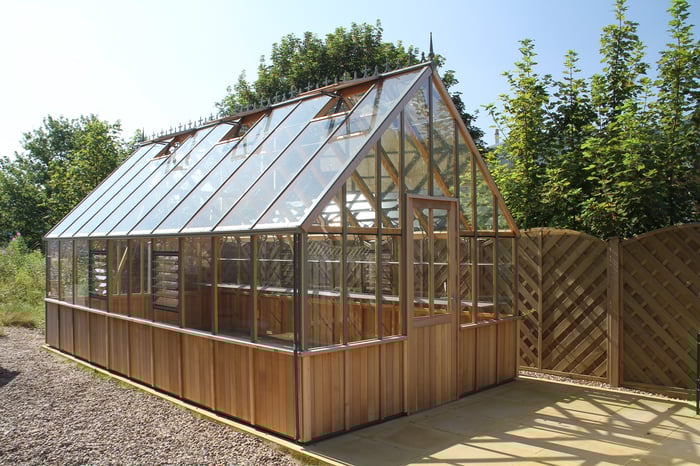 What Cedar Brings to the Table
When customers choose our cedar kits over our aluminum/glass or polycarbonate options, they're usually drawn to three specific qualities: thermal performance, longevity, and aesthetics. Let's break down what those actually mean in practice.
- Superior Temperature Stability: Natural wood insulation buffers against temperature swings, enhanced by automatic roof vents
- Extended Growing Season: Start seeds 4-6 weeks earlier with consistent climate control
- Energy Efficiency: 30-50% reduction in heating costs with superior thermal mass
- Exceptional Longevity: 25-30+ year lifespan with knot-free, treated Western Red Cedar
- Natural Rot Resistance: Cedar's natural oils plus treatment resist aging and water absorption
- Crystal-Clear Growing: 3mm tempered glass provides unmatched light transmission and durability
- Smart Ventilation: Automatic temperature-controlled roof vents plus manual louvre windows
- Architectural Beauty: Premium materials age gracefully with natural warmth and character
The Thermal Mass Difference
Wood has natural insulating properties that create remarkably stable temperature environments. The technical term is thermal mass, the material's ability to absorb, store, and slowly release heat energy.
What this means for your plants: more consistent temperatures throughout the day and night. Customers report being able to start seeds 4-6 weeks earlier in spring and extend their fall growing season significantly. Some in zones 5-7 grow winter greens without supplemental heat.
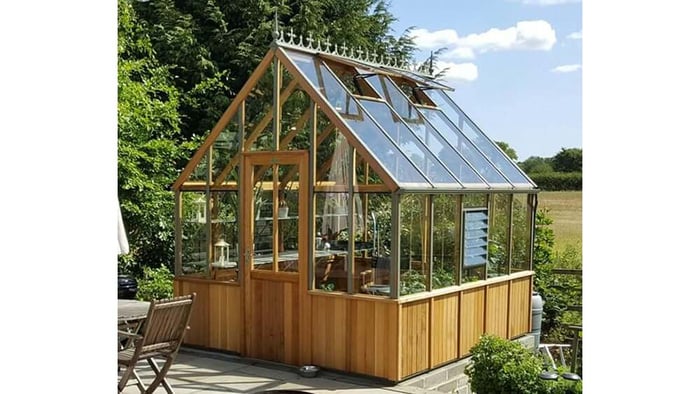 Why We Choose Western Red Cedar Specifically
We could work with pine, fir, or other woods for our wooden greenhouse kits. Cedar costs more, which means our kits cost more. But there's a reason we stuck with premium Western Red Cedar, and why we specifically source knot-free lumber.
Natural Rot and Insect Resistance
Cedar contains natural oils called thujaplicins that make it remarkably durable outdoors. Unlike most woods, cedar doesn't require chemical treatment to resist rot and insect damage. Our cedar is additionally treated to resist aging and water absorption, preserving its natural warmth and color far longer than untreated wood.
The knot-free specification isn't just about aesthetics; knots are weak points where moisture can penetrate and structural integrity can be compromised. By using only select, knot-free Western Red Cedar, we ensure every piece of your wooden greenhouse frame is equally strong and equally resistant to the elements.
We have customers with 15-year-old cedar kits that show no signs of structural decay. The wood weathers and develops character, but the integrity remains solid thanks to both the natural properties of cedar and our treatment process.
Alton Octagonal Wooden Greenhouse Kit

$19,250.00
Alton Octagonal Wooden Greenhouse Kit Elegant Design & Superior Craftsmanship Sold by South Table Sheds Free Shipping (lower 48 states) Authorized Retailer The Alton octagonal wooden greenhouse kit offers a stunning blend of modern elegance and practicality, making it the… read more
Maintenance Expectations
Our treated, knot-free Western Red Cedar doesn't demand constant attention. The treatment process helps the wood resist aging and water absorption, which means it maintains its natural warmth and color longer than standard cedar. Many customers appreciate how the wood ages gracefully while retaining its structural integrity.
- Spring: Thanks to the steep roof angle, snow damage is rare—but do a visual check. Clean the aluminum gutters, sweep out overwintered debris, open all vents to air out space
- Summer: Focus on growing—the automatic roof vents handle temperature control
- Fall: Inspect glass panel seals and weatherstripping, check that louvre windows operate smoothly
- Winter: The steep roof angle typically handles snow automatically, but brush off any unusual accumulation (2+ feet)
- Every 3-5 Years: Optional touch-up treatment to maintain the cedar's color and enhance water resistance (not required for structure)
- Ongoing: Clean aluminum gutters seasonally to ensure proper water drainage away from the foundation
How We Design Cedar Kits Differently
Cedar behaves differently than aluminum, so we engineered our kits to work with wood's natural properties rather than fighting them. Every component is designed for both performance and longevity.
- 3mm Tempered Glass Panels: Crystal-clear visibility with reinforced strength against harsh weather conditions
- Automatic Roof Vents: Temperature-controlled openers adjust ventilation without manual intervention
- Large-Pane Louvre Windows: Manual openers allow precise airflow adjustments, preventing excess humidity
- Steep Roof Angle: Helps snow slide off effortlessly, minimizing accumulation and structural strain
- Elevated Aluminum Base: Raises the cedar frame 2 inches above ground, protecting it from moisture damage and rot
- Cast Aluminum Gussets: Strengthen every framing joint, ensuring exceptional stability and long-term durability
- Premium Western Red Cedar: Features knot-free wood, treated to resist aging and water absorption
- Powder-Coated Aluminum Staging Shelves: Sleek, contemporary alternative to traditional timber shelves
- Durable Aluminum Gutters: Upgraded from PVC for superior water management and aesthetic appeal
- Integral Powder-Coated Metal Base Plinth: Provides added reinforcement for improved durability
Smart Ventilation That Works Automatically
Temperature control is critical in any greenhouse, which is why our wooden greenhouse kits include automatic roof vents with temperature-controlled openers. These openers use a cylinder filled with a mineral compound that expands when warm and contracts when cool, no electricity required. When the interior temperature rises, the vents open automatically to release excess heat. When it cools, they close to retain warmth.
We've also incorporated large-pane louvre windows with manual openers throughout the structure. These give you precise control over airflow patterns, allowing you to prevent excess humidity while maintaining optimal growing temperatures. The combination of automatic roof vents and manual louvres creates a flexible ventilation system that adapts to your specific growing needs.
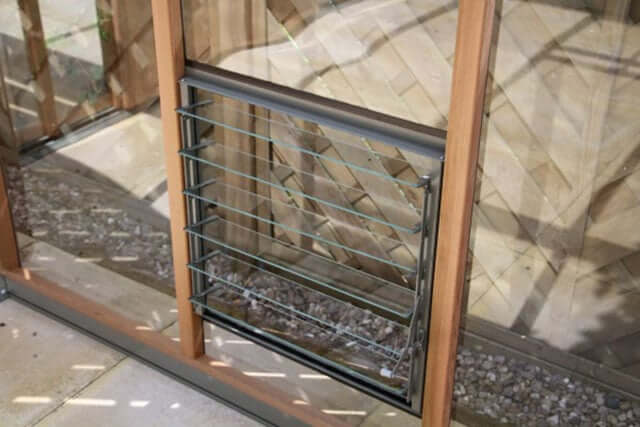 Louvre Window
Traditional Joinery Meets Modern Engineering
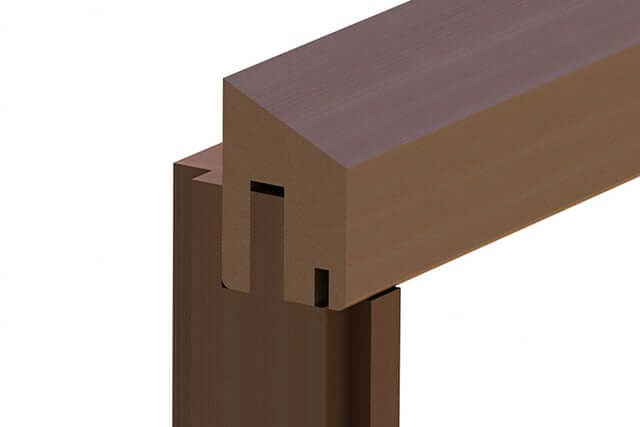
Our cedar frame connections use mortise and tenon joints, a traditional timber framing technique that creates incredibly strong wood-to-wood connections. But we've reinforced these traditional joints with cast aluminum gussets at every critical connection point. This hybrid approach gives you the beauty of traditional joinery with the structural confidence of modern engineering.
The cast aluminum gussets aren't just functional—they're precision-made to complement the cedar's natural beauty. When properly assembled, these joints are stronger than the wood itself. Customers with heavy hanging baskets or multiple shelving tiers appreciate the exceptional stability this design provides.
Foundation Design That Protects Your Investment
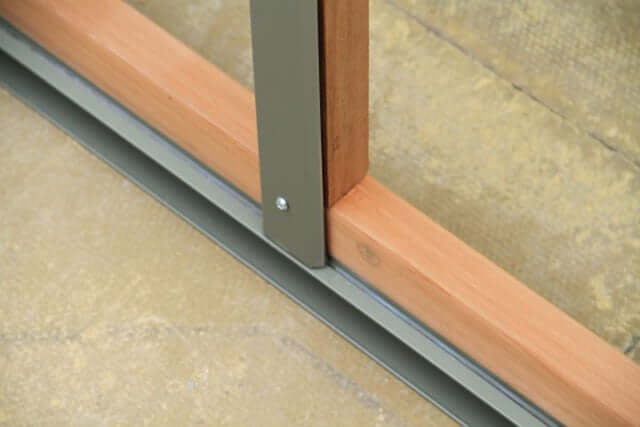 Wood's vulnerability isn't weather, it's prolonged contact with standing water. Our cedar kits include an elevated aluminum base that raises the cedar frame 2 inches above ground level. This aluminum base acts as a protective barrier between the wood and any ground moisture.
The elevated design ensures air circulates underneath, water drains away quickly, and the cedar stays dry. We've also incorporated an integral powder-coated metal base plinth that provides additional reinforcement and durability. This isn't an optional upgrade, it's engineered into every kit because we've seen firsthand how crucial proper foundation design is for long-term performance.
Snow and Weather Management Built In
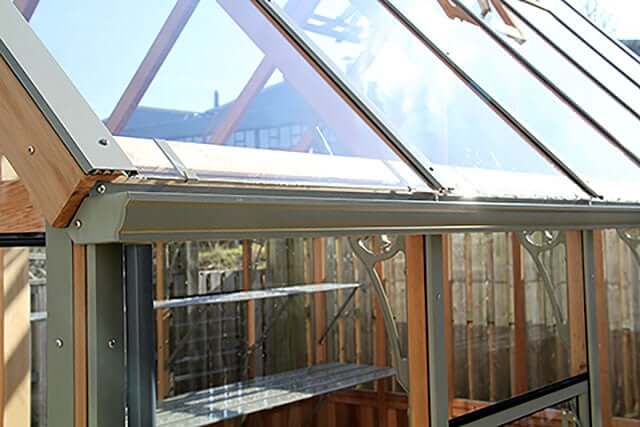
Our steep roof angle isn't just for aesthetics, it's a practical design feature that helps snow slide off effortlessly. This minimizes accumulation on the roof and reduces structural strain during heavy winter weather. Customers in snow-prone regions particularly appreciate this feature, as it eliminates the need for manual snow removal in most cases.
We've also upgraded to durable aluminum gutters instead of traditional PVC. These powder-coated aluminum gutters improve water management, direct runoff away from the foundation, and add a refined aesthetic detail that complements the cedar construction. They're also far more durable than plastic alternatives and won't become brittle over time.
Modern Staging Solutions
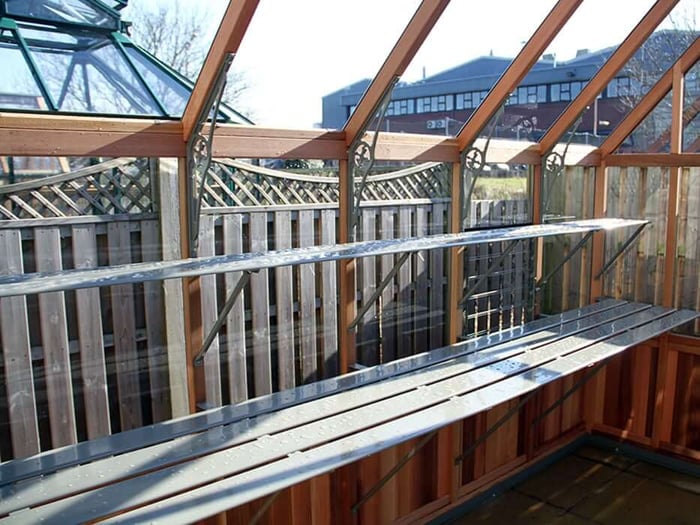
While we love the warmth of cedar framing, we've made a deliberate choice to use powder-coated aluminum staging shelves instead of traditional timber. This gives the interior a sleek, contemporary look while providing practical advantages: the aluminum shelves won't rot, they're easier to clean, and they create visual contrast with the cedar framing that many customers find appealing.
The powder coating protects against moisture and provides a smooth, professional finish. These shelves are strong enough to support heavy flats of seedlings or potted plants without sagging, and they'll last as long as the wooden greenhouse itself.
Knee Walls With Multiple Functions
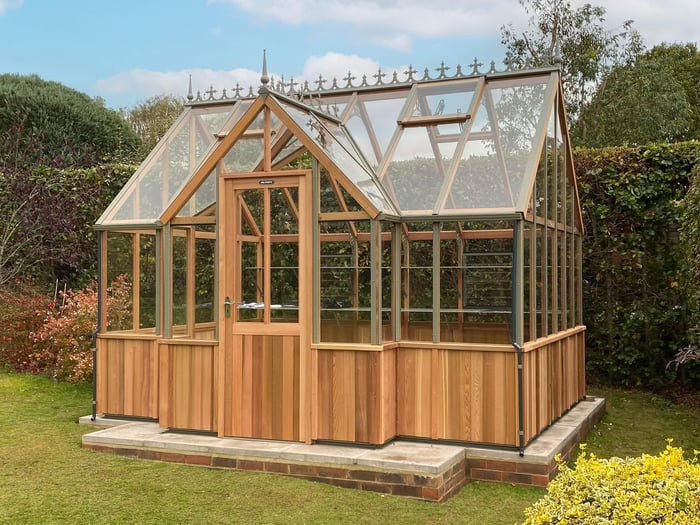
All our wooden greenhouse kits incorporate 3-foot solid cedar knee walls before glazing begins. This isn't just aesthetic (though the look is cleaner and more finished). The knee walls create perfect bench height for potting, eliminate the coldest thermal zone at ground level, provide excellent attachment points for the powder-coated aluminum shelving, and showcase the beautiful knot-free Western Red Cedar construction.
Customers regularly mention the knee walls as one of their favorite design features, especially once they start loading up multiple tiers of growing space on the integrated shelving system.
Premium Tempered Glass Glazing
Our wooden greenhouse kits feature exclusively premium 3mm tempered glass panels, we don't offer polycarbonate as an option for our cedar structures. This deliberate choice reflects our commitment to creating high-end greenhouses where every component matches the quality of the Western Red Cedar frame.
Why Only Tempered Glass for Cedar
Tempered glass provides crystal-clear visibility with reinforced strength against harsh weather conditions. Unlike standard glass, it's specially treated to withstand impact and temperature fluctuations, making it 4-5 times stronger than regular glass. If it does break (which is rare), it shatters into small, less dangerous pieces rather than large shards.
The 3mm thickness provides excellent light transmission, approximately 90% of available sunlight reaches your plants, while maintaining structural integrity. This level of clarity is perfect for serious growers who want to maximize natural light and observe their plants clearly throughout the growing season.
- Maximum Light Transmission: ~90% of sunlight reaches plants with crystal clarity
- Premium Aesthetic: Classic greenhouse appearance that complements the cedar's natural beauty
- Enhanced Durability: 4-5x stronger than regular glass, safer if broken
- Easy Maintenance: Simple to clean, won't yellow or become cloudy over time
- Lifetime Performance: Glass doesn't degrade from UV exposure—lasts as long as the cedar structure
- Unmatched Clarity: View your plants without diffusion or distortion
- Temperature Clarity: Clear glass allows you to observe frost formation and monitor conditions visually
Professional Installation System
The glass mounting system we've developed allows for proper thermal expansion and contraction, which is crucial for longevity. The panels are secured with weatherproof seals that maintain clarity while preventing air and moisture infiltration. This precision-engineered system ensures your glass panels remain secure and weather-tight for decades.
The combination of premium tempered glass with Western Red Cedar creates a greenhouse that's not just functional, it's an architectural statement. The clarity of the glass showcases your plants while the cedar frame provides warmth and character that improves with age.
Assembly Reality Check
Let's be straight about this: cedar kits require more carpentry skill than our aluminum/glass or polycarbonate options, but assembly time is surprisingly reasonable, typically around 10 hours with a helper.
If you've built a deck, installed fence posts, or have general DIY experience, you can handle it. The pre-cut framing, cast aluminum gussets, and detailed photo instructions make the process much more straightforward than custom carpentry. Most customers complete assembly in a long weekend.
If you are in the Denver, Colorado area, South Table Sheds assembles greenhouse kits. Give us a call to get started!
What's Included
Our cedar kits come with everything you need for assembly:
| Included in Kit | You Provide |
|---|---|
| Pre-cut knot-free Western Red Cedar framing | Basic tools (drill, level, square) |
| 3mm tempered glass panels | Helper for positioning large sections |
| Elevated aluminum base with metal plinth | Level foundation surface |
| Cast aluminum gussets and fasteners | Time: ~10 hours with a helper |
| Automatic roof vents with temperature openers | |
| Large-pane louvre windows with manual openers | |
| Powder-coated aluminum staging shelves | |
| Durable aluminum gutters | |
| Door hardware and weatherstripping | |
| Photo-illustrated assembly instructions |
Support During Assembly
We're available to help assemble by phone and email if you hit snags during construction. We've walked hundreds of customers through assembly questions. Common sticking points are usually solved in a five-minute phone call, sometimes it just helps to talk through what you're looking at. If you live in the Denver, Colorado area, South Table Sheds can help assemble.
The Investment Conversation
Our cedar kits represent a premium investment compared to our aluminum/glass or polycarbonate options. The decision usually comes down to your timeline, priorities, and what you value most in a growing space.
| Factor | Wooden Greenhouse (Cedar) | Aluminum/Glass Greenhouse | Polycarbonate Greenhouse |
|---|---|---|---|
| Assembly Time | ~10 hours with helper | 8-12 hours | 6-10 hours |
| Insulation (R-value) | ~1.0 per inch (frame) | ~0.007 (frame) | ~0.007 frame, ~1.6 glazing |
| Heating Cost Impact | 30-50% reduction | Baseline | 15-25% reduction |
| Expected Lifespan | 25-30+ years | 10-15 years | 15-20 years |
| Light Transmission | ~90% (tempered glass) | ~90% (clear glass) | ~80% (diffused) |
| Temperature Stability | Excellent (thermal mass) | Good (requires active venting) | Very Good (insulated panels) |
| Aesthetic Aging | Improves with patina | Shows wear/oxidation | Gradual clarity reduction |
| Skill Level Required | Moderate (basic DIY skills) | Low to Moderate | Low |
Short-Term vs. Long-Term Thinking
If you need a greenhouse functional this season and budget is tight, our aluminum/glass or polycarbonate kits deliver excellent value. They go up faster, cost less initially, and perform well for many years. Polycarbonate options are particularly popular with budget-conscious growers who still want good insulation.
If you're thinking in decades rather than years, the math shifts. Cedar's superior insulation typically reduces heating costs by 30-40% in cold climates. Over ten years, that difference can be substantial. More importantly, properly maintained cedar structures regularly last 25-30+ years. We have customers with 15-year-old kits that look ready for another 15.
When Cedar Makes Perfect Sense
After years of selling both options, we've noticed patterns in who gravitates toward our wooden greenhouse kits and why.
Premium cedar greenhouse customers tend to view their greenhouse as permanent infrastructure, something that might outlast them. They're usually serious about year-round growing and care about temperature stability. Many are in colder climates where insulation performance directly impacts heating costs and growing success.
They also tend to value aesthetics more highly. A wooden greenhouse has an architectural presence that blends into garden landscapes. It looks like it belongs there rather than like equipment was installed.
When Our Other Options Might Fit Better
We want you to choose the right greenhouse for your situation, even if that's not our most expensive option.
The "best" greenhouse is the one that matches your actual needs, not just the most expensive one we sell. We'd rather you be happy with a polycarbonate or aluminum/glass kit than frustrated with a cedar one that didn't fit your situation.
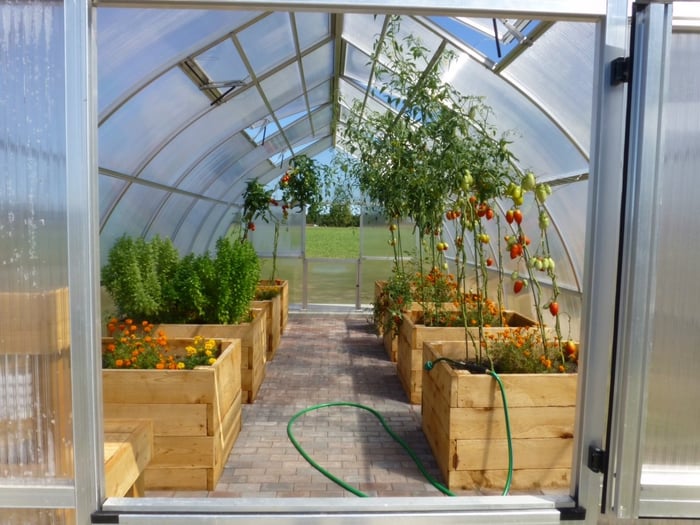 The Intangible Factor of a Wooden Greenhouse
There's something about wooden greenhouses that's harder to quantify but comes up in customer feedback constantly. People describe wanting to spend time in them, not just working but actually hanging out.
Cedar smells like forest. It has a warmth—both literal and aesthetic—that creates inviting space. Customers tell us they take morning coffee in there, read in there on autumn afternoons, use it as a quiet retreat space as much as a growing area.
One customer called it "the room I didn't know my garden needed." That emotional connection to the space is real, even if it's subjective. Some people feel it with wood; others are perfectly happy with functional aluminum. Neither is wrong.
Making Your Decision
If you're weighing options, here are the questions that usually clarify things:
- Timeline: Growing for 5 years? Consider aluminum/glass or polycarbonate. Building for 20+ years? Cedar's longevity justifies the premium.
- Climate: Cold winters or year-round growing goals? Cedar or polycarbonate provide best insulation. Mild climate? All options work well.
- Budget: Tight initial budget? Polycarbonate offers great value. Mid-range? Aluminum/glass provides classic look. Investment mindset? Cedar delivers decades of performance.
- Assembly Skills: Comfortable with carpentry? Cedar is rewarding. Prefer quick assembly? South Table Sheds can assemble for you.
- Aesthetics: Want permanent architecture that ages beautifully? Cedar delivers. Need functional space? Any option works.
- Weather Concerns: Hail or severe storms common? Polycarbonate is virtually indestructible. Moderate climate? Glass provides clarity.
- Energy Efficiency: Heating costs a concern? Cedar saves 30-50%, polycarbonate saves 15-25% versus aluminum/glass baseline.
What Customers Report Long-Term
We follow up with customers annually to understand how different greenhouse types perform over time. The feedback helps us improve designs and guides new customers toward the right choice.
Cedar customers consistently report: earlier spring planting (4-6 weeks), extended fall harvests, successful winter growing of cold-hardy greens, reduced heating costs (30-50% in cold climates), and structures that age beautifully rather than deteriorating.
They also mention the satisfaction of building something substantial. There's pride in a well-crafted cedar greenhouse that goes beyond just function. Several customers have mentioned it increased their property value during home sales.
Our Role in Your Decision
We're here to help you figure out what actually fits your situation. That might be a wooden greenhouse. It might be aluminum/glass. It might be polycarbonate, or a combination.
We can connect you with customers in your area who've volunteered to answer questions. Nothing replaces seeing a 10-year-old wooden greenhouse and asking the owner what they wish they'd known before buying. Same goes for our aluminum/glass and polycarbonate customers, real experiences matter more than marketing.
We're also available for pre-purchase consultations. Tell us your climate, your growing goals, your budget, your timeline. We'll give you honest guidance about which of our options makes the most sense, even if that's not the most expensive one.
Because we're not just making one sale. We're building relationships with people who might buy their second wooden greenhouse from us in 20 years, or recommend us to friends, or call us with questions years after purchase. That's only possible if we help you choose correctly the first time.
Taking the Next Step
If a wooden greenhouse sounds right for your situation, we're here to help. We'll answer questions about sizing, foundation requirements, assembly difficulty, glazing choices, and anything else you're wondering about.
If you're still deciding between materials, that's fine too. Take your time. The right greenhouse is worth getting right, whether that's a wooden greenhouse, aluminum/glass, polycarbonate, or something in between.
Reach out when you're ready. We'll help you figure out what makes sense for your garden, your budget, and your vision for the next few decades of growing.
FAQs
Will a wooden greenhouse really save money on heating costs?
Yes, measurably so in cold climates. Cedar's thermal mass (R-value of ~1.0 per inch versus aluminum's 0.007) creates natural insulation that buffers temperature swings. Customers in zones 5-7 report 30-50% reductions in heating costs compared to aluminum/glass structures. The wood absorbs heat during sunny periods and releases it gradually during cold nights, creating passive climate control. Combined with the automatic roof vents and manual louvre windows, you maintain more stable temperatures with less energy input. In mild climates, the savings are less dramatic but still noticeable. The real value shows up over years—that 40% annual savings compounds significantly over a 25-year lifespan.
Do I need to stain or seal the cedar every year?
No. The Western Red Cedar we use is treated to resist aging and water absorption, and it contains natural oils that provide inherent protection. You can optionally apply a treatment every 3-5 years if you want to maintain the original color, but it's not structurally necessary. Many customers prefer to let the cedar age naturally to its silvery-grey patina. The wood will weather, but it won't rot, there's a significant difference. Your main maintenance is seasonal: checking the aluminum gutters, inspecting glass seals, and ensuring the automatic vents operate smoothly.
Why don't you offer polycarbonate glazing for cedar greenhouses?
It's a deliberate design decision. Our wooden greenhouses are positioned as premium, high-end structures where every component matches the quality of the Western Red Cedar frame. The 3mm tempered glass provides 90% light transmission with crystal clarity that complements the cedar's natural beauty—it creates a cohesive aesthetic statement. Polycarbonate, while excellent in our dedicated polycarbonate greenhouse line, diffuses light and has a different visual character. We'd rather offer polycarbonate in purpose-built structures optimized for it than compromise the premium character of our cedar kits. If you want superior insulation with diffused light, our polycarbonate greenhouse line delivers that specifically—and at a better price point than mixing materials would achieve.
How long does a wooden greenhouse actually last?
With proper foundation design and minimal maintenance, our Western Red Cedar greenhouses regularly last 25-30+ years. We have customers with 15-year-old structures that show no signs of structural decay and look ready for another 15 years. The key is the elevated aluminum base that keeps the cedar 2 inches above ground moisture, combined with cedar's natural rot-resistant oils. The knot-free, treated cedar we use is specifically selected for longevity—this isn't standard lumber that will deteriorate quickly.