Table of Contents
- Buy or Build a Greenhouse in Colorado
- What Makes Colorado Different When Deciding to Buy or Build a Greenhouse: 5 Critical Factors
- 5. Our Short Growing Season in Colorado Makes Greenhouses Essential
- Building From Scratch: Hidden Costs
- Buying a Quality Kit: What You're Paying For
- Why Customers Choose Our Professional Installation
- FAQs
Buy or Build a Greenhouse in Colorado
A Colorado Expert's Honest Answer
If you're researching greenhouses in Colorado, you've probably seen the generic advice: "Kits are easier, building is cheaper." But after 17 years of building custom structures across the Denver metro area, South Table Sheds can tell you the real answer is more nuanced, and the stakes are higher here than in most of the country.
Colorado isn't like other states. Our unique combination of extreme weather conditions means that a greenhouse built for sea-level climates may not survive its first winter, or its first hailstorm. Before you decide whether to buy or build a greenhouse, you need to understand what you're really up against.
 The Short Answer
For most Colorado homeowners who are deciding on whether to buy or build a greenhouse, buying a quality greenhouse kit is the smarter investment. Here's why: the engineering requirements for our climate are demanding, the hidden costs of DIY builds add up quickly, and the consequences of getting it wrong can be expensive.
But that answer comes with important caveats. Let me walk you through the real costs, the Colorado-specific challenges, and when building from scratch might actually make sense.
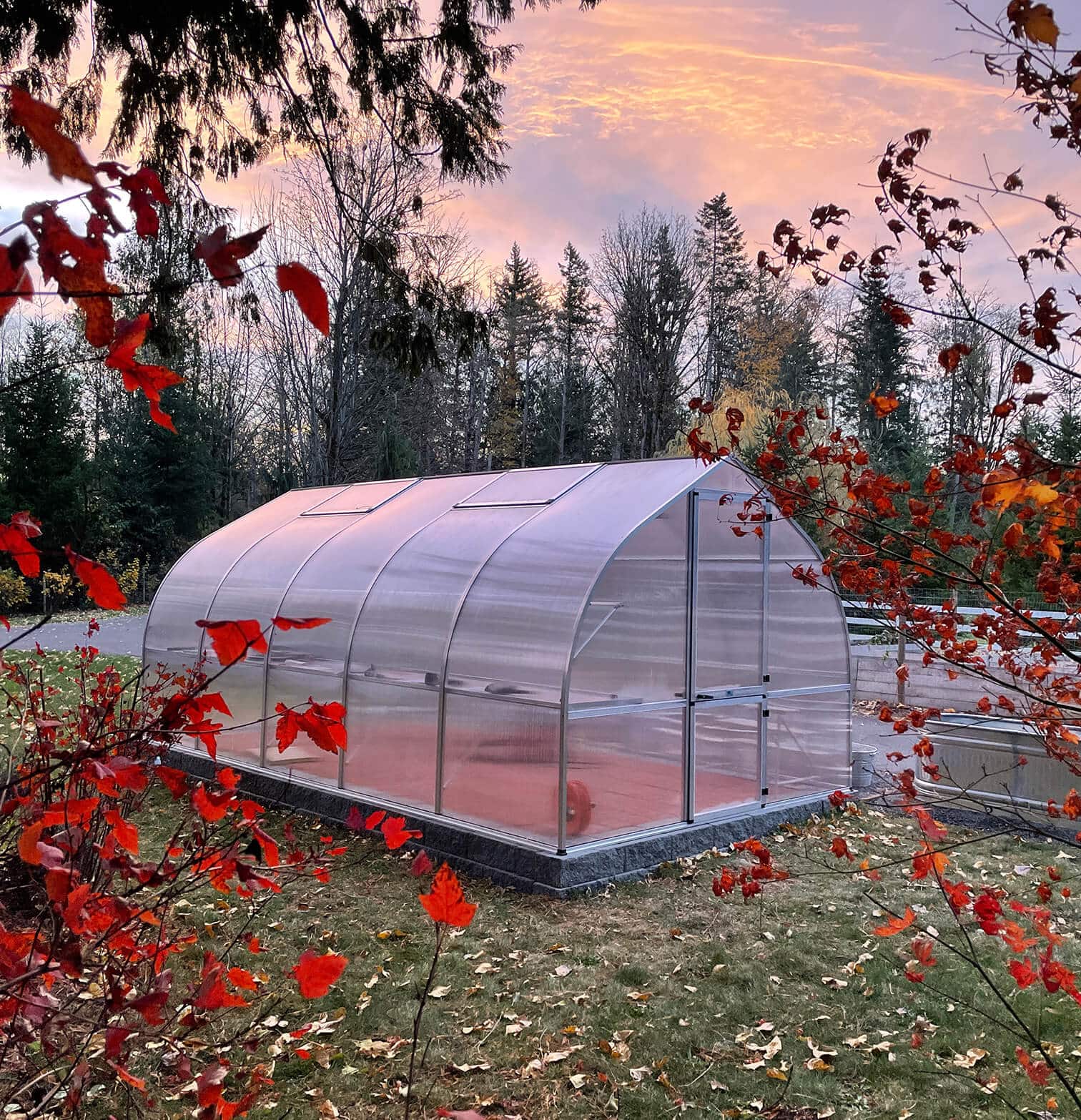
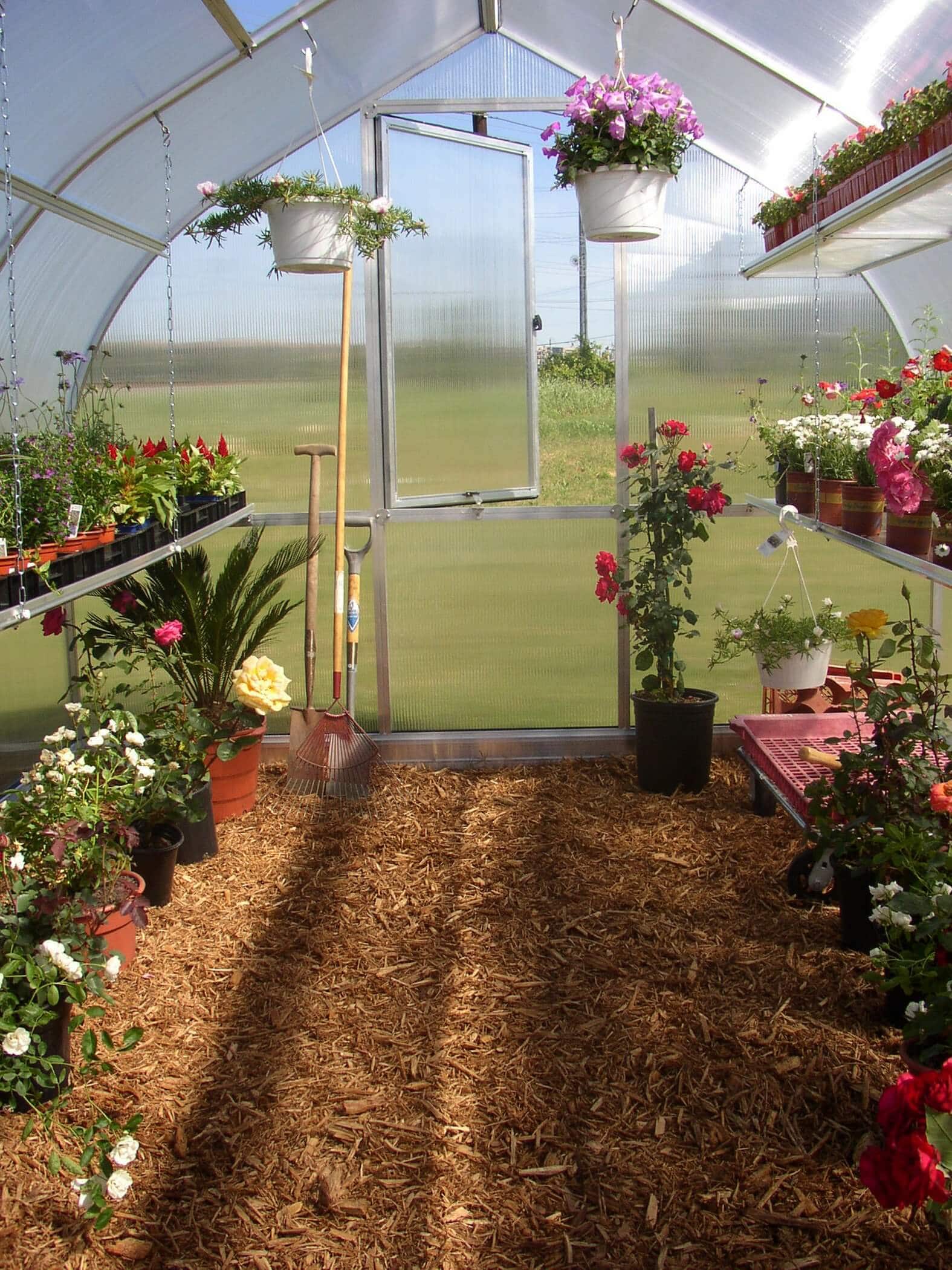
Large Polycarbonate Greenhouse | Exaco RIGA
$5,859.00
$6,899.00
RIGA Series Greenhouse Kit FREE SHIPPING (lower 48) All polycarbonate panels (8mm sides, 10mm gable ends) Complete aluminum frame with all extrusions and connectors Barn-style hinged door with key lock (30" W × 72" H) Roof ventilation window(s) with automatic… read more

What Makes Colorado Different When Deciding to Buy or Build a Greenhouse: 5 Critical Factors
1. Snow Load Requirements Vary Dramatically by Location
This is the factor most DIY builders completely overlook. Colorado building codes require structures to withstand specific snow loads measured in pounds per square foot (psf) and these requirements vary wildly depending on where you live.
In Denver, the ground snow load requirement is 35 psf. Move to the Pikes Peak region, and you're looking at 43-57 psf depending on elevation. Mountain towns like Pagosa Springs require 93 psf nearly three times Denver's requirement.
What does this mean for you? If you're building from scratch, you need structural calculations stamped by a Colorado-registered engineer proving your design meets local requirements. Quality greenhouse kit manufacturers provide these specifications, which can significantly streamline the permitting process.
Hidden cost of DIY: Engineering calculations can run $500-$2,000+ if you need to hire a structural engineer. Kit manufacturers have already done this work.
2. Chinook Winds Can Destroy Inadequate Structures
If you've lived along the Front Range, you know our winds are no joke. Just this month, gusts exceeded 100 mph in multiple locations, reaching Category 2 hurricane strength. The historic January 1982 Chinook windstorm hit 137 mph and damaged 40% of buildings in Boulder.
Denver building code specifies design wind speeds up to 140 mph in the western parts of the city. These aren't theoretical numbers, these are the forces your greenhouse must withstand.
A DIY greenhouse built with lumber-store materials and YouTube tutorials is unlikely to survive a serious Chinook event. I've seen it happen: customers come to us after their homemade greenhouse became an expensive pile of debris.
What quality kits offer: Engineered frames designed for high-wind environments. Our Janssens and RIGA greenhouses use heavy-gauge aluminum frames specifically rated for severe weather.
3. We Live in the "Hail Capital of North America"
This isn't hyperbole. The Front Range experiences 7-9 days of hail each season, the highest frequency in North America. Colorado typically faces 3-4 catastrophic hailstorms annually, each causing at least $25 million in insured damage. Over the past decade, hail has caused more than $5 billion in insured losses statewide.
Among the top 10 U.S. cities for hail damage claims? Four are in Colorado: Denver, Colorado Springs, Greeley, and Lakewood.
Material choice matters enormously here. Glass greenhouses can be risky in Colorado, one bad storm can shatter a panel. Polycarbonate is 200 times stronger than glass, but quality varies significantly. Cheap polycarbonate can still be damaged by large hail, while premium panels come with 10-year warranties against hail damage.
I've had customers whose quality polycarbonate greenhouses survived baseball-sized hail that destroyed their house roof, skylights, and fiber glass structures on the same property. That's the difference quality makes.
4. Intense UV Radiation Degrades Materials Faster
Colorado's elevation means significantly stronger UV exposure. At Denver's altitude (5,280 feet), UV intensity is 20-30% higher than at sea level. In the foothills or mountains, it's even more intense.
Why does this matter for greenhouses? UV rays cause polycarbonate to yellow, become brittle, and eventually fail. Cheap polycarbonate panels without proper UV protection can degrade within just a few months of sun exposure.
Quality greenhouse panels use co-extruded UV protection layers that maintain effectiveness for 10-15 years. The sun degrades approximately 5 microns of UV coating annually, premium panels with 50-micron UV layers are engineered for Colorado's conditions.
DIY risk: Sourcing your own polycarbonate means carefully verifying UV protection ratings. Install panels with the wrong side facing out, and they'll fail prematurely. Kit manufacturers handle this complexity for you.
5. Our Short Growing Season in Colorado Makes Greenhouses Essential
Colorado spans five USDA growing zones (3-7), with average minimum temperatures ranging from -40°F to 5°F. Many areas have fewer than 120 frost-free days, and weather can change from hot to hail in minutes.
Without a greenhouse, outdoor growing seasons average just three months. With a quality greenhouse, you can extend that to 7-9 months, effectively tripling your productive season.
This means a greenhouse isn't a luxury in Colorado; it's practically a necessity for serious gardening. That changes the cost-benefit calculation significantly. A well-built greenhouse that lasts 20+ years and triples your growing season delivers tremendous value per dollar.
If you're looking at smaller-scale season extension, cold frames are another option worth pricing out. Find out how much cold frames cost.
Alton Westminster Cedar Greenhouse
$34,650.00
Alton Westminster Cedar Greenhouse Crafted by Alton. Offered by South Table Sheds. Inspired by Nature. Built for Life. Sold by South Table Sheds Free Shipping (lower 48 states) Authorized Retailer Timeless Craftsmanship Rooted in Heritage With over a century of… read more

The Real Cost Comparison
Let's break down the actual costs you'll encounter with each approach.
Building From Scratch: Hidden Costs
Materials: $500-$2,000 for a small hobby greenhouse; $5,000-$25,000 for larger structures
Engineering calculations: $500-$2,000+ if required for permits
Foundation: $1,000-$5,000+ (Colorado requires frost depth of 30-42" depending on location)
Permits and inspections: $200-$500+
Tools you may not own: $200-$1,000+
Time investment: Weeks to months of weekends
Replacement costs when something fails: Unknown, and there's no warranty
Buying a Quality Kit: What You're Paying For
Kit price: $2,000-$15,000+ depending on size and quality
Shipping to Colorado: Often included or $200-$800
Foundation: Still required, $1,000-$5,000+
Assembly: DIY (days, not months) or professional installation
Warranty: Typically 5-15 years on frame and panels
Engineering documentation: Included, simplifies permitting
The bottom line: When you factor in hidden costs, a mid-range DIY build often approaches the price of a quality kit, but without the engineering, warranty, or durability guarantees.
When Building From Scratch Makes Sense
I'm not saying DIY is always wrong. Building your own greenhouse can be the right choice if:
- You need a non-standard size or shape to fit an unusual space
- You have professional construction experience (carpentry, glazing, structural work)
- You have access to quality recycled materials and know how to evaluate their condition
- You're building in a mild climate zone (which rules out most of Colorado)
- The project itself is the goal, you value the building experience over cost-efficiency
For everyone else, the math favors buying a kit engineered for Colorado's demanding conditions.
Why Customers Choose Our Professional Installation
At South Table Sheds, we sell greenhouse kits for DIY assembly across the country, and we also provide professional installation services locally in the Denver and Front Range area. When customers choose professional installation, it's typically for three reasons:
Quality work:
We know exactly how to handle the tricky parts, proper sealing, level foundations, secure anchoring for Colorado winds
Customer service:
We stand behind our installations and are available if any issues arise
Affordability:
Our installation costs are often less than what customers expect, and far less than fixing a poorly-assembled structure later
That said, quality kits like Janssens and RIGA are absolutely designed for DIY assembly. If you're handy and follow the instructions carefully, you can do it yourself in a weekend or two.
The Bottom Line
Colorado's extreme weather including heavy snow loads, hurricane-force winds, relentless hail, and intense UV radiation, demands more from a greenhouse than most climates. The real question isn't "Is it cheaper to build or buy a greenhouse?" It's "What will actually survive here and deliver value over 10-20 years?"
A cheap DIY greenhouse that fails after two winters isn't a bargain. A quality kit that extends your growing season from 3 months to 9 months for two decades is an investment that pays for itself many times over.
My honest recommendation: invest in a greenhouse kit engineered for Colorado conditions. If you're in the Denver metro area and want help selecting the right greenhouse or need professional installation, we're here to help.
Ready to find the right greenhouse for your Colorado garden?
Browse our greenhouse collection or contact us for a free consultation. www.southtablesheds.com
FAQs
How much does it cost to build a greenhouse in Colorado?
Building a greenhouse from scratch in Colorado typically costs $500–$2,000 for a small hobby structure and $5,000–$25,000 for larger permanent greenhouses. However, these estimates often exclude hidden costs like engineering calculations ($500–$2,000+ if required for permits), foundation work ($1,000–$5,000+ due to Colorado's 30–42" frost depth requirements), permits, and specialized tools. When you factor in these extras, DIY builds often approach the cost of quality greenhouse kits—without the warranty or engineering guarantees.
Can a greenhouse withstand Colorado hail?
It depends on the materials. The Front Range experiences 7–9 hail days per season and is known as the "hail capital of North America." Quality polycarbonate panels are 200 times stronger than glass and can withstand significant hail impacts. Premium polycarbonate greenhouses often come with 10-year warranties against hail damage. Cheap polycarbonate or single-ply corrugated panels, however, can still be damaged by large hail, so material quality matters.
How long does a greenhouse last in Colorado's climate?
A quality greenhouse with proper materials can last 20+ years in Colorado, but durability depends heavily on construction quality and material choices. Colorado's intense UV radiation (20–40% stronger than sea level) degrades cheap polycarbonate quickly, sometimes within months. Premium panels with co-extruded UV protection are designed to last 10–15 years before showing wear. Frames matter too: heavy-gauge aluminum resists corrosion and withstands our extreme wind events far better than lightweight or wooden frames.