Table of Contents
- The Short Answer: Yes, But Only If It’s Done Right
- What Separates a Property Asset From Yard Clutter
- Why a Greenhouse Is Worth More in Colorado Than Most States
- What Colorado Homeowners Typically Invest
- Zoning, HOAs, and Permits: The Details That Protect Your Investment
- Our Honest Take
- Thinking About Adding a Greenhouse to Your Colorado Property?
- FAQs
Does a Greenhouse Increase Property Value in Colorado?
A Practical Answer From Outdoor Experts
South Table Sheds • Denver Metro Area • southtablesheds.com
If you’re thinking about adding a greenhouse to your Colorado property, you’ve probably wondered whether it’s just a gardening project or something that could actually increase what your home is worth. It’s a fair question to ask if greenhouses increase property value and the honest answer is that it depends entirely on how you do it.
Here at South Table Sheds, and we’ve spent over 10 years serving our communities. We’ve seen greenhouse projects that look like genuine upgrades to a property, and we’ve seen ones that look like they’ll blow into the neighbor’s yard during the next windstorm. The difference between the two comes down to a few decisions that are worth understanding before you spend a dollar.
The Short Answer: Yes, But Only If It’s Done Right
There’s no universal formula that says “a greenhouse adds X percent to your home value.” Appraisers generally treat greenhouses as accessory structures, similar to a pergola, a high-end shed, or an outdoor kitchen. That means the value comes less from the structure itself and more from how well it integrates with your property, how permanent it looks, and how useful it is to a future buyer.
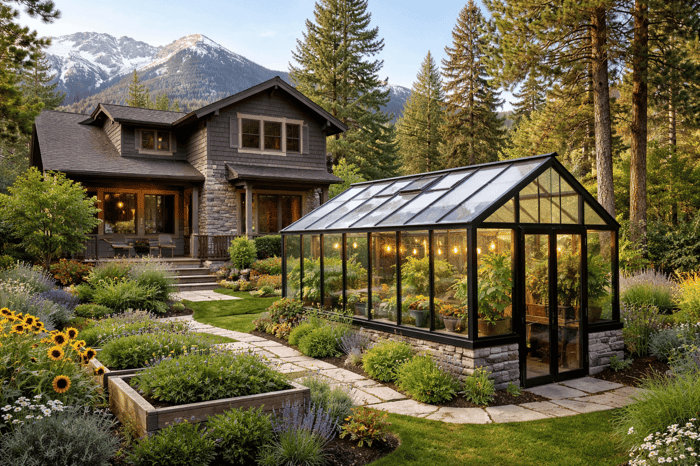
A professionally installed polycarbonate greenhouse on a leveled gravel pad with proper anchoring reads as a feature of the property. A wobbly kit on bare grass with torn panels reads as something the next owner will have to deal with. One adds value. The other subtracts it.
What Separates a Property Asset From Yard Clutter
Permanent Structure vs. Temporary Setup
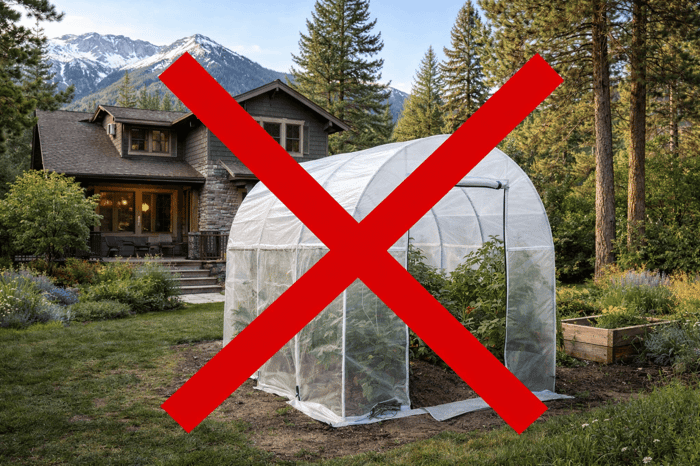
This is the single biggest factor in whether a greenhouse helps or hurts your property’s appeal. A pop-up hoop house or a lightweight plastic-sheeting greenhouse from Amazon is not adding property value, it’s a seasonal accessory that’ll likely end up in a landfill after a couple of Colorado winters. Those structures aren’t designed for our wind, our UV exposure, or our temperature swings.
The line is clear: if your greenhouse has a real foundation such as a gravel pad, concrete footings, or ground anchors, along with rigid aluminum framing and polycarbonate or glass panels, it reads as a permanent improvement. If it’s plastic sheeting over a lightweight frame sitting on grass, it’s not an asset. It’s something someone will eventually need to remove.
Quality of Installation
A greenhouse that’s sitting crooked on uneven ground with gaps in the panels and a door that won’t close looks like a project someone gave up on. A buyer walking the backyard sees a problem, not a feature. Compare that with a structure that’s been leveled, squared, sealed at the joints, and anchored for Colorado wind. It looks intentional. It looks like someone invested in the property, not just in a hobby.
The difference isn’t always about spending more money on the greenhouse itself. It’s about the site prep and the installation quality. A mid-range kit that’s properly installed on a prepared site will always look better, and appraise better, than a premium kit that’s been put together poorly.
Janssen Retro Royal Victorian Backyard Greenhouse

$28,999.00
$29,999.00
Janssens Retro Royal Victorian Backyard Greenhouse Step into Timeless Elegance Offered by South Table Sheds Free Shipping Authorized Retailer The Retro Royal Victorian Backyard greenhouse reimagines the beloved Royal Victorian design with charming 4mm aluminum panels on the lower half… read more
Why a Greenhouse Is Worth More in Colorado Than Most States
Here’s where our state actually works in your favor. Colorado has specific growing challenges that every gardener here understands, and a greenhouse is a direct solution to all of them. That makes it more appealing to future buyers here than it would be in, say, North Carolina or Oregon.
Season Extension
Colorado’s reliable outdoor growing window runs roughly from mid-May through September, and even that gets interrupted by late frosts and early cold snaps. A greenhouse pushes that season in both directions, letting you start seeds in March and grow well into October or November. For anyone who gardens in Colorado, that’s not a luxury, it’s the difference between a real harvest and a frustrating hobby.
Hail Protection
Anyone who’s lived along the Front Range for more than a year has watched a hailstorm destroy a garden in minutes. A polycarbonate greenhouse is hail-resistant in a way that row covers and shade cloth simply aren’t. This is a selling point that’s unique to our region, buyers here understand the problem because they’ve lived it.
Wind and UV
Our afternoon winds along the Front Range regularly hit 30 to 40 mph in spring, and UV intensity at altitude breaks down cheap materials faster than at sea level. A well-anchored greenhouse with UV-stabilized panels is built to handle both. A buyer who sees that structure and understands what it’s designed to withstand recognizes value immediately.
Not sure what you can grow in a greenhouse? Check out our post on what to grow in a greenhouse in Colorado
Colorado Growing Challenges a Greenhouse Solves: • Short growing season (roughly 4–5 months outdoors) • Frequent, damaging hailstorms along the Front Range • Sustained spring winds of 30–40+ mph • Extreme UV exposure at altitude • Temperature swings of 30–40°F in a single day • Wildlife pressure (deer, rabbits, elk at higher elevations) |
Alton Durham Cedar Victorian Greenhouse

$28,600.00
Alton Durham Victorian Greenhouse Timeless Elegance & Superior Craftsmanship Sold by South Table Sheds Free Shipping (lower 48 states) Authorized Dealer The Alton Durham Victorian Greenhouse brings 100 years of expert craftsmanship into your backyard. With its classic Victorian styling,… read more
What Colorado Homeowners Typically Invest
Greenhouse projects across the Denver metro area generally fall into a few tiers, and the investment range matters when you’re thinking about return on value.
On the lower end, if you’ve already purchased a kit and just need professional assembly, you’re typically looking at $500 to $1,500 in labor depending on the size and complexity of the structure. On the higher end, a full project that includes site preparation, leveling, a gravel pad, ground anchoring designed for Colorado wind conditions, plus assembly of a larger polycarbonate greenhouse can run $3,000 to $7,000 or more when you factor in both the kit and installation.
The key insight here is that the site prep and installation quality account for a significant portion of the value a greenhouse adds to your property. A $2,000 kit that’s professionally installed on a properly prepared site will contribute more to your property’s appeal than a $4,000 kit that’s sitting uneven on bare dirt.
Wondering what a greenhouse will cost? Read our post on greenhouse cost in Colorado to get answers!
Zoning, HOAs, and Permits: The Details That Protect Your Investment
This is the part most people skip, and it’s the part that can turn a property improvement into a property liability.
Across the Denver metro, most freestanding greenhouses under a certain square footage, often 120 to 200 square feet depending on the jurisdiction, don’t require a building permit. But setback rules still apply. You can’t place a structure too close to a property line or within a utility easement, and those distances vary by city and county. Checking with your local building department before you start is always worth the phone call.
HOAs are the bigger wildcard. Some have no issue with a clean, low-profile greenhouse that blends with the property. Others restrict any accessory structures in the backyard. A few require architectural review and approval before you build anything. If your greenhouse violates your HOA’s covenants, it’s not an asset—it’s a compliance issue the next buyer’s attorney will flag.
From a property value perspective, this matters more than people realize. A greenhouse that’s properly permitted or HOA-approved is a documented improvement. One that technically violates setback rules or covenants is a liability that shows up during a home inspection or title review. The structure itself might be beautiful, but if it’s not compliant, it works against you.
Our Honest Take
Does a greenhouse increase property value in Colorado? In our experience, yes, when three things are true. First, the structure is permanent and well-built, with rigid framing, polycarbonate panels, and proper UV protection. Second, the installation is professional, meaning the site is level, the greenhouse is anchored for our wind conditions, joints are sealed, and it looks like it belongs on the property. Third, it’s compliant with local zoning and any HOA requirements, so it’s a documented improvement rather than a potential issue.
When those three things come together, a greenhouse doesn’t just add square footage to your property, it tells a buyer that someone cared enough to invest in this home for the long term. In a state where outdoor living and gardening are part of the lifestyle, that story matters.
Thinking About Adding a Greenhouse to Your Colorado Property?
If you’re in the Denver metro area and you’re weighing whether a greenhouse makes sense for your property, we’re happy to talk through it. We can help you choose the right greenhouse kit for your space, handle the site prep and installation, assemble the greenhouse, and make sure everything is anchored and sealed for Colorado conditions. We’ll give you an honest recommendation, even if that means telling you a simple kit is all you need.
South Table Sheds serves the entire Denver metro area including Arvada, Golden, Lakewood, Wheat Ridge, Littleton, Castle Rock, Morrison, Evergreen, Thornton, and surrounding communities. Contact us at southtablesheds.com for a free consultation.
FAQs
Does a greenhouse increase property value in Colorado?
Yes, but only when it's done right. A professionally installed greenhouse on a prepared site with proper anchoring reads as a property feature. A cheap kit on bare grass reads as something the next owner will have to remove. The value comes from permanence, installation quality, and compliance with local zoning or HOA rules.
What's the difference between a greenhouse that adds value and one that doesn't?
The line is clear: a greenhouse with a real foundation (gravel pad, concrete footings, or ground anchors), rigid aluminum framing, and polycarbonate panels is a permanent improvement. A pop-up hoop house or plastic-sheeting structure sitting on grass is a temporary accessory that won't survive Colorado's wind and UV, and won't add value to your property.
Why is a greenhouse worth more in Colorado than other states?
Colorado's short growing season, frequent hail, high winds, and intense UV create specific challenges every local gardener understands. A greenhouse solves all of them — extending the season from March through November, protecting plants from hail, and standing up to 30-40 mph winds. Buyers here recognize that value immediately because they've lived the problem.
How much does a greenhouse installation cost from South Table Sheds?
It depends on scope. If you already own a kit and just need assembly, labor typically runs $500 to $2,500 depending on size. A full project including site prep, a gravel pad, wind anchoring, and installation of a larger polycarbonate greenhouse can run $3,000 to $7,000 or more. The site prep and installation quality account for much of the value a greenhouse adds.