Table of Contents
- What Is a Greenhouse?
- How Do Greenhouses Work: The Common Misconception
- Why Greenhouses Stay Warm at Night
- Key Greenhouse Components
- How Do Greenhouses Work in the Winter?
- Greenhouses in the Summer - Staying Cool
- Optimizing Light for Plant Growth
- Water and Humidity Management
- Soil and Plant Nutrition
- Location Matters: Where to Place Your Greenhouse
- The Real "Greenhouse Effect"
- Choosing the Right Greenhouse
- Getting Started with Your Greenhouse
- The Bottom Line
- FAQs
The Complete Science Behind How Greenhouses Work
If you've ever wondered how greenhouses work and allow gardeners to grow fresh vegetables, herbs, and flowers in any season, you're not alone. These remarkable structures create the perfect environment for plants by harnessing simple physics principles that have been used for centuries.
Whether you're considering your first small hobby greenhouse or want to understand the science behind these growing structures, this guide will walk you through everything you need to know about how greenhouses work.
What Is a Greenhouse?
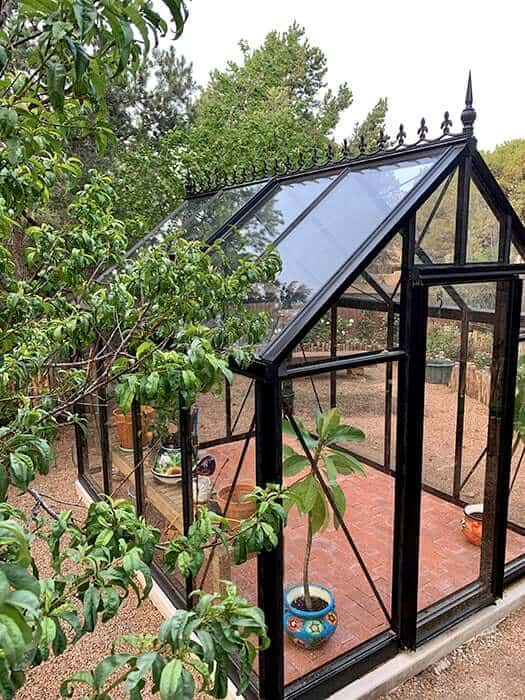
A greenhouse is a structure with transparent walls and a roof, typically made from glass, polycarbonate, or plastic sheeting, that creates an ideal growing environment for plants throughout the year. The primary purpose is to protect your plants from cold, frost, extreme sunlight, harsh weather, and pests while maintaining optimal growing conditions.
How Do Greenhouses Work: The Common Misconception
Most people believe greenhouses work because glass lets sunlight in but blocks heat from escaping by trapping infrared radiation. While this sounds logical, it's actually not the primary mechanism at play.
Interestingly, polyethylene greenhouses work just as well as glass ones, even though polyethylene lets infrared radiation pass through almost as easily as regular light. So what's really happening?
The Real Science on how greenhouses maintain their warmth: Convection Restriction
When the sun heats bare ground outdoors, warm air rises and mixes with cooler air above it. This process continues until the heated air layer can be a mile or more deep on a sunny summer day. The warming effect is spread over such a large mass of air that temperature increases stay relatively modest.
In a greenhouse, this mixing is confined to the small layer of air trapped under the roof. There's a much smaller volume of air to heat, so temperatures rise much faster and higher. Think of it like heating water in a kettle—a large kettle full of water heats slowly, while one with just half an inch of water heats rapidly.
This is also why ventilation is so crucial in preventing a greenhouse from overheating, and why closed cars get dangerously hot in the sun.
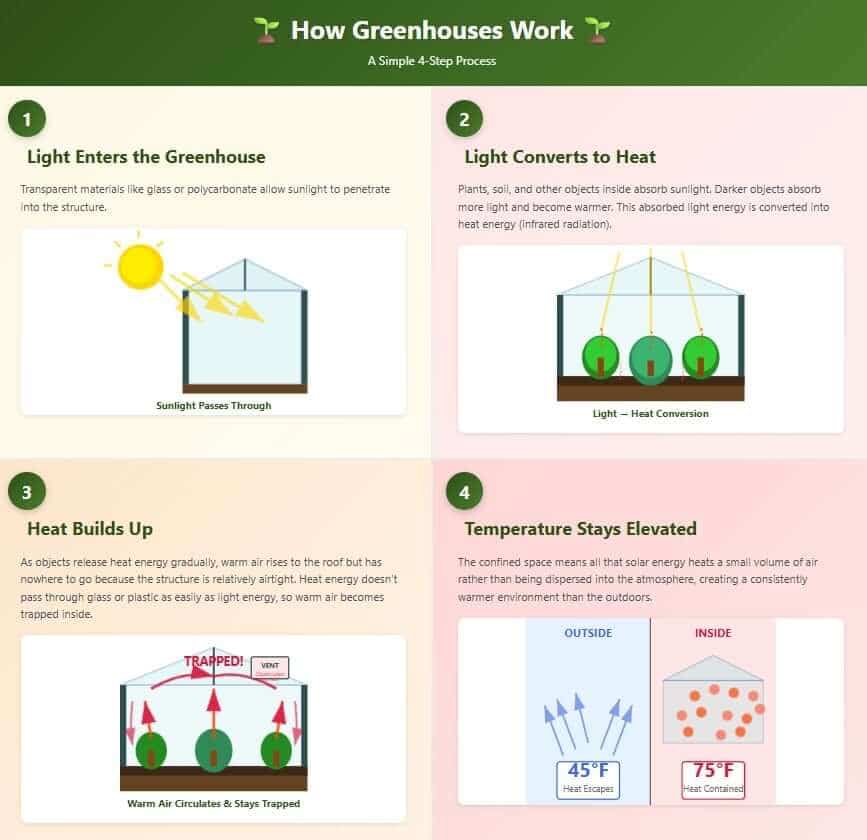
How Heat Is Generated and Retained in a Greenhouse
Here's the step-by-step process:
Step 1: Light Enters the Greenhouse Transparent materials like glass or polycarbonate allow sunlight to penetrate into the structure.
Step 2: Light Converts to Heat Plants, soil, and other objects inside the greenhouse absorb the sunlight. Darker colored objects absorb more light and become warmer, while lighter objects reflect more light. This absorbed light energy is converted into heat energy (infrared radiation).
Step 3: Heat Builds Up As objects inside the greenhouse absorb light, they release heat energy gradually. Warm air rises to the roof of the greenhouse but has nowhere to go because the structure is relatively airtight. Heat energy doesn't pass through glass or plastic as easily as light energy, so the warm air becomes trapped inside.
Step 4: Temperature Stays Elevated The confined space means all that solar energy heats a small volume of air rather than being dispersed into the atmosphere, creating a consistently warmer environment than the outdoors.
Why Greenhouses Stay Warm at Night
The nighttime behavior of greenhouses involves different physics than daytime heating, and this is where the material properties do matter.
After sunset, the stored heat from the day continues to radiate from the ground. In a greenhouse, cooling starts from the roof rather than the ground. The stored heat from the full height of the greenhouse remains available overnight, and plants never get much colder than the surrounding air.
Even in polyethylene greenhouses, this works effectively because water vapor from the moist greenhouse air condenses on the inside of the roof. Water, like glass, blocks thermal infrared radiation, making polyethylene and glass greenhouses nearly identical in their nighttime behavior provided you've watered your plants.
The soil also acts as a thermal mass, absorbing heat during the day and releasing it slowly at night, which helps moderate temperature fluctuations and maintain relatively stable conditions.
Key Greenhouse Components
Structure and Materials
Framework: The skeleton of your greenhouse, typically made from galvanized steel or aluminum, must be sturdy enough to withstand weather conditions while supporting the covering material.
Covering Materials: Different materials offer different benefits:
- Glass: Provides maximum sunlight transmission and excellent durability
- Polycarbonate: Offers superior thermal insulation and energy efficiency
- Polyethylene plastic: Budget-friendly option that still performs well
Temperature Control and Ventilation
Proper ventilation is absolutely critical for healthy plant growth. Without it, you'll experience slow growth, poor harvests, and increased susceptibility to diseases.
Ventilation serves three essential functions:
- Temperature Control: Removes excess heat to prevent scorching plants during hot days
- Humidity Regulation: Prevents fungal and bacterial diseases by controlling moisture levels
- CO2 Management: Introduces fresh air to replenish carbon dioxide needed for photosynthesis
Ventilation systems can include:
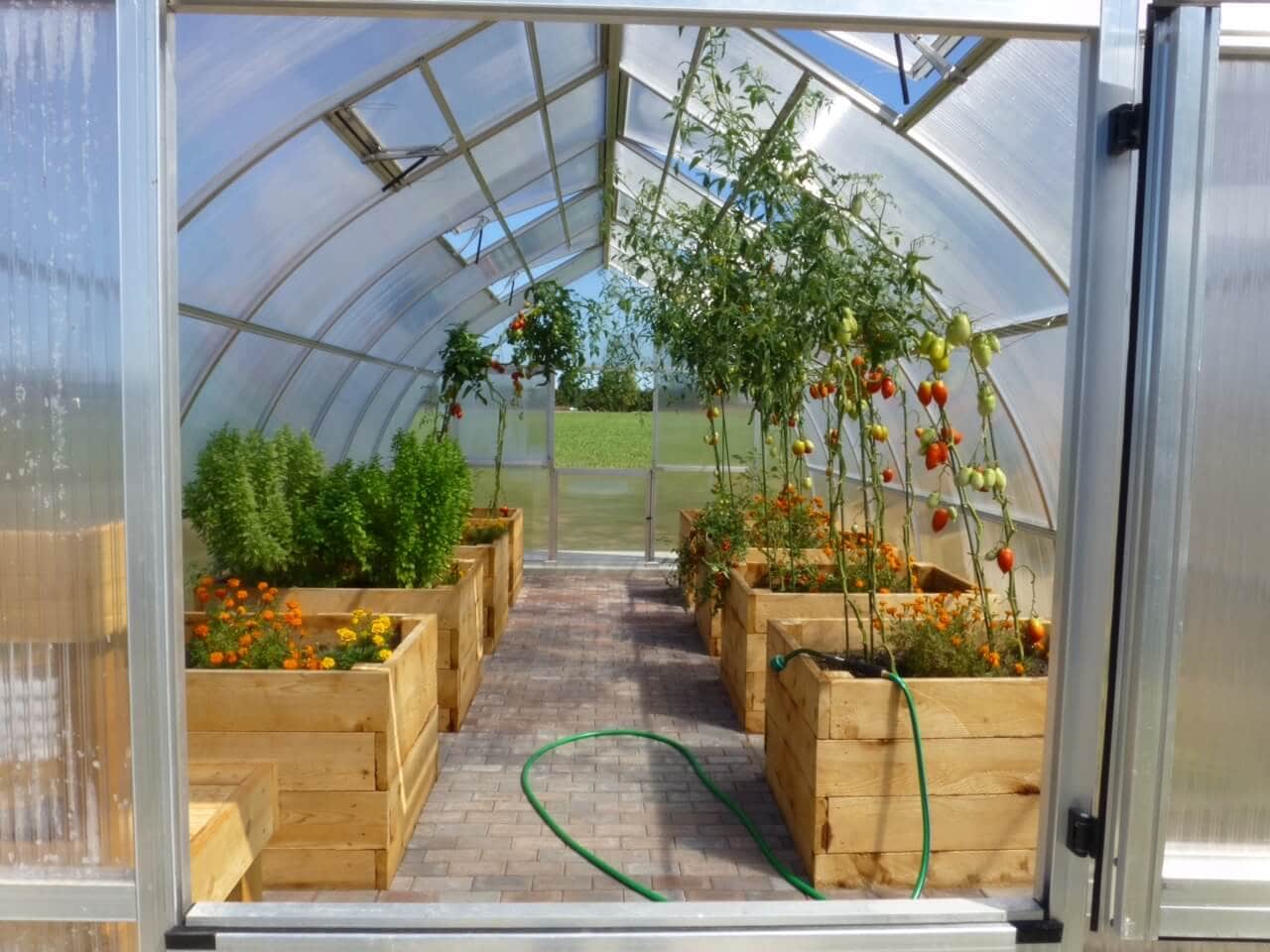
- Roof vents and side vents
- Automated window systems
- Fans for air circulation
- Temperature sensors for automated control
Heating Systems
In cold climates or during winter months, supplemental heating may be necessary. Options include:
- Electric heaters
- Gas heaters
- Geothermal systems
- Passive solar storage (like black-painted water barrels that absorb heat during the day and release it at night)
How Do Greenhouses Work in the Winter?
Winter is when greenhouses truly prove their value, allowing you to grow plants year-round even when temperatures outside drop below freezing. Understanding how your greenhouse maintains warmth during cold months helps you maximize its potential and keep your plants thriving.
Daytime Heat Capture
Even on cold winter days, sunlight streaming through your greenhouse panels creates significant warmth. The greenhouse effect works just as effectively in winter as in summer—sunlight enters, gets absorbed by plants and soil, and converts to heat that's trapped in the confined air space.
On a sunny winter day, you might see outdoor temperatures of 30°F while your greenhouse interior reaches 60-70°F or higher. This dramatic temperature difference is possible because the small volume of air inside heats quickly from solar radiation.
Nighttime Heat Retention
The real challenge in winter is maintaining warmth after sunset. Here's how greenhouses stay warm at night:
- Thermal Mass Effect: During the day, soil, water, and other materials inside your greenhouse absorb and store heat. As temperatures drop at night, these materials slowly release their stored warmth, acting like natural heaters. This is why many greenhouse gardeners place black-painted water barrels or stone masses inside—they absorb extra heat during the day and radiate it back at night.
- Insulation Properties: The greenhouse structure itself provides insulation from cold winds and freezing air. Even a simple polyethylene greenhouse offers significant protection because water vapor from your plants condenses on the inside of the plastic, creating a water layer that blocks heat from radiating away.
- Reduced Heat Loss: Unlike outdoor plants where heat dissipates into the vast atmosphere, the enclosed greenhouse environment prevents rapid heat loss. The air stays relatively still, and the structure blocks convective cooling from wind.
Winter Growing Strategies
To optimize your greenhouse for winter use:
- Supplemental Heating: In very cold climates, you may need additional heat sources like electric heaters, propane heaters, or passive solar systems to maintain minimum temperatures for tender plants.
- Insulation Upgrades: Adding bubble wrap to walls, using thermal curtains at night, or installing double-walled polycarbonate panels can significantly improve heat retention.
- Strategic Plant Selection: Focus on cold-hardy crops like lettuce, spinach, kale, and other greens that thrive in cooler temperatures (40-60°F) rather than heat-loving plants.
- Maximize Sunlight: Keep panels clean of snow and debris, and position your greenhouse where it receives maximum southern exposure during winter's shorter days.
- Thermal Mass: Add water barrels, stones, or concrete blocks painted dark colors to absorb daytime heat and release it slowly at night.
Frost Protection
Even without supplemental heating, a properly managed greenhouse can protect plants from frost damage on most winter nights. The combination of daytime heat storage in soil and thermal mass, plus the insulating barrier of the structure itself, typically keeps interior temperatures above freezing even when it's 20°F or colder outside.
Greenhouses in the Summer - Staying Cool
During summer, greenhouses help regulate temperature through ventilation systems. Automatic windows and roof vents allow excess heat to escape, keeping plants cool and comfortable. The structure also shields plants from extreme weather, pests, storms, and damaging wind.
Strategies for keeping greenhouses cool in summer include:
- Painting the roof white to reflect light
- Using shade cloths or curtains
- Positioning near deciduous trees for natural shade
- Increasing ventilation
Optimizing Light for Plant Growth
Light is essential for photosynthesis—the process where plants use sunlight, water, and carbon dioxide to produce food and release oxygen. Most plants need approximately six hours of sunlight per day, though specific requirements vary by species.
Natural and Supplemental Lighting
While natural sunlight provides the bulk of lighting needs, supplemental artificial lighting can extend growing seasons and improve plant health:
- LED lights: Energy-efficient and customizable to specific plant needs
- High-pressure sodium (HPS) lights: Traditional greenhouse lighting
- Metal halide lights: Good for vegetative growth
Photoperiod—the duration of light exposure—can be carefully managed to influence flowering, fruiting, and other critical plant processes.
Water and Humidity Management
Proper watering systems ensure plants receive adequate moisture without overwatering, which can lead to root diseases.
Irrigation Options:
- Drip irrigation: Delivers water directly to plant bases, minimizing waste and promoting efficient nutrient uptake
- Misting systems: Create humid environments for moisture-loving plants
- Traditional watering: Hand watering with hoses and nozzles
Smart Technologies:
- Soil moisture sensors monitor water needs
- Automated irrigation systems control watering schedules
- Climate control systems prevent overwatering
- Rainwater harvesting systems enhance sustainability
Soil and Plant Nutrition
The growing medium in your greenhouse plays a vital role in plant health.
Soil Options:
- Traditional potting soils enriched with compost
- Soilless mixes (perlite, vermiculite, coconut coir) that provide sterile, well-aerated environments
- Hydroponic systems that deliver nutrients directly to roots
Nutrient Management: Regular monitoring and adjustment of nutrient levels ensures optimal growth. This can include organic or synthetic fertilizers, nutrient solutions for hydroponic systems, or automated nutrient dosing in advanced setups.
Location Matters: Where to Place Your Greenhouse
The location of your greenhouse significantly affects its performance:
Optimal Positioning:
- Best: South-facing for maximum sunlight exposure
- Second best: Southeast or east-facing orientations
- Attached greenhouses: Can benefit from shared wall heat with existing buildings
Climate Considerations:
- In very hot climates, position near deciduous trees for summer shade while allowing winter sun
- In cold climates, maximize southern exposure and consider adding insulation
- Freestanding greenhouses typically need supplemental heating in cold regions
The Real "Greenhouse Effect"
Ironically, the atmospheric "greenhouse effect" that causes global warming actually does work the way people mistakenly think garden greenhouses operate. Carbon dioxide, methane, water vapor, and other gases in Earth's atmosphere let solar radiation pass through but block thermal infrared radiation from escaping back to space—similar to the old (incorrect) explanation of how greenhouses trap heat.
Your garden greenhouse, however, works primarily by restricting air circulation rather than by blocking infrared radiation.
Choosing the Right Greenhouse
When selecting a greenhouse, consider:
Size: Start small if you're a beginner; larger structures suit experienced gardeners with ambitious growing goals
Budget: Quality mid-size greenhouses range from $1,000-$5,000; custom or advanced greenhouses can exceed $10,000
Durability: Choose materials that withstand your local weather conditions with UV-resistant panels and strong frames
Features: Consider automated ventilation, heating systems, and accessories like shelving and trellises
Alton Westminster Cedar Greenhouse
$34,650.00
Alton Westminster Cedar Greenhouse Crafted by Alton. Offered by South Table Sheds. Inspired by Nature. Built for Life. Sold by South Table Sheds Free Shipping (lower 48 states) Authorized Retailer Timeless Craftsmanship Rooted in Heritage With over a century of… read more

Getting Started with Your Greenhouse
Ready to begin your year-round growing journey? Here's how to prepare:
- Clean thoroughly: Remove debris and wipe down surfaces to maximize sunlight
- Check all systems: Ensure ventilation, heating, and watering systems function properly
- Prepare growing media: Add nutrient-rich compost or fresh potting mix
- Inspect structure: Look for damage and make necessary repairs
- Plan your plantings: Research what grows best in your region and season
The Bottom Line
Greenhouses work by trapping warm air in a confined space rather than by blocking heat radiation though both the structure and thermal mass effects contribute to maintaining stable temperatures day and night. Combined with proper ventilation, lighting, watering, and climate control, greenhouses create ideal conditions for extending your growing season or even cultivating plants year-round.
Whether you're growing fresh vegetables in winter, starting seeds earlier in spring, or protecting delicate plants from harsh weather, understanding how your greenhouse works helps you use it more effectively and grow healthier, more productive plants.
Ready to start your greenhouse gardening journey? At South Table Sheds, we offer a range of high-quality greenhouse kits with free shipping throughout the continental United States. If you're local to the Denver, CO area, we also provide professional assembly services to get you growing quickly. Contact us today to find the ideal greenhouse for your needs.
FAQs
What temperature should I maintain in my greenhouse?
Ideal temperatures vary by what you're growing. Most vegetables thrive between 60-75°F during the day and 50-60°F at night. Seedlings prefer slightly warmer conditions (70-80°F), while cold-hardy crops like lettuce and spinach can handle 40-60°F. In summer, you'll need to manage heat to keep temperatures below 85°F to prevent plant stress. Use thermometers or temperature sensors to monitor conditions, and adjust ventilation and heating as needed for your specific plants.
Do greenhouses work in the winter?
Yes! Greenhouses are designed for year-round use. In winter, they capture daytime solar heat and retain it through thermal mass (soil, water barrels, stone) that releases warmth at night. Even without supplemental heating, a properly managed greenhouse can maintain temperatures 20-30°F warmer than outside. In very cold climates, you may need to add a heating system for tender plants, but cold-hardy vegetables like kale, spinach, and lettuce can thrive in an unheated greenhouse through winter.
How to cool down a greenhouse?
Summer heat management requires good ventilation and strategic cooling methods. Install roof vents, side vents, or automated window systems to allow hot air to escape. Fans improve air circulation and help maintain even temperatures. Other effective strategies include painting the roof white to reflect sunlight, using shade cloths during peak sun hours, positioning your greenhouse near deciduous trees for natural summer shade, and ensuring adequate water for plants (which increases humidity and cooling through evapotranspiration).
What's the difference between glass and polycarbonate greenhouses?
Both materials work effectively, but each has advantages. Glass provides maximum light transmission (about 90%) and excellent durability, lasting decades with minimal maintenance. However, it's more expensive, heavier, and can break. Polycarbonate offers superior insulation (keeping greenhouses warmer in winter and cooler in summer), is virtually unbreakable, lighter weight, and more affordable. It transmits slightly less light (about 80-85%) and may yellow over time with UV exposure. For most home gardeners, polycarbonate offers the best balance of performance and value.
How hot does a greenhouse get in summer?
On a sunny summer day, an unventilated greenhouse can easily reach 100-120°F or even higher, which is dangerously hot for most plants. With proper ventilation, you can maintain temperatures between 75-85°F, which is ideal for most vegetables and flowers. The temperature inside depends on several factors: outside temperature, greenhouse size, ventilation quality, and whether you're using shade cloths or cooling strategies. Without ventilation, even a mild 70°F day outside can push greenhouse temperatures above 100°F within a few hours