We offer only the best compost bins for sale. Durable tumbler and stationary designs chosen for one reason: they actually work! Every bin in this collection is built to keep pests out, keep odors down, and turn yard and kitchen waste into rich, usable compost with minimal fuss.
Whether you're composting for the first time or you've been at it for years, the right bin comes down to how much waste you generate, how much space you have, and how hands-on you want to be. The guide below walks through exactly that, so you can pick the bin that fits your yard instead of guessing.
What to Look for in a Compost Bin
Tumbler vs. Stationary: Which Fits Your Space?
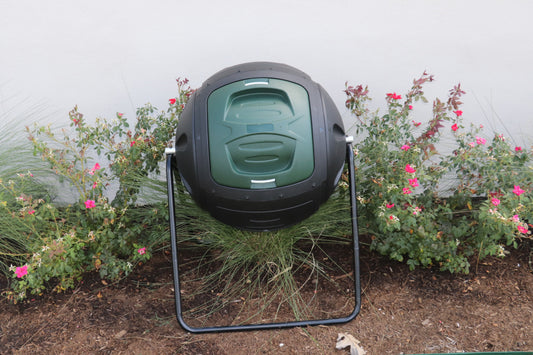
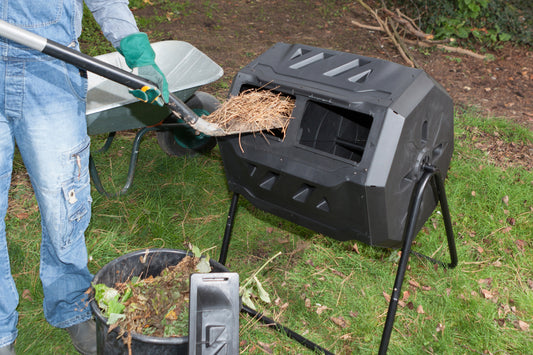
Tumblers, like our rotating composters, sit on a stand and turn with a crank or handle. Turning mixes and aerates the pile without a shovel or pitchfork, which speeds up decomposition and keeps the process tidy. They're a strong fit for smaller yards, patios, or anyone who wants faster results with less physical effort.
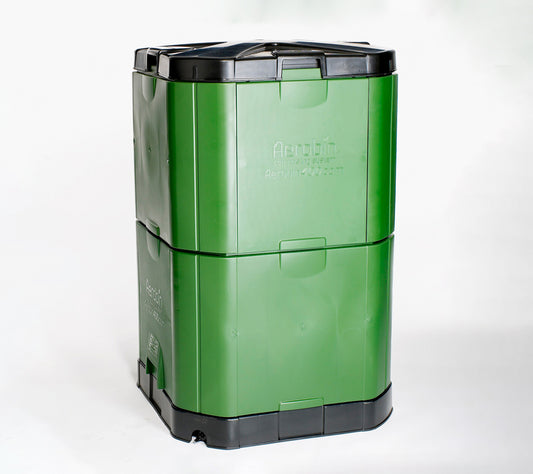
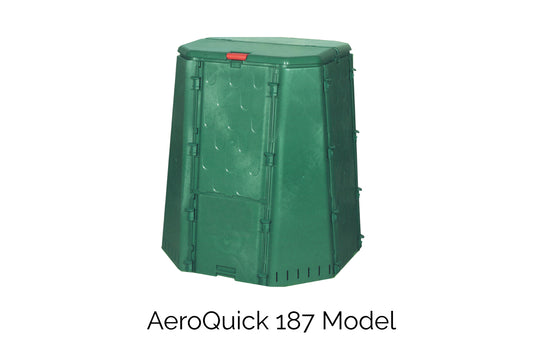
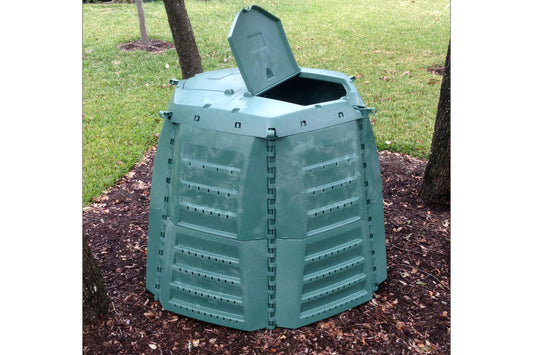
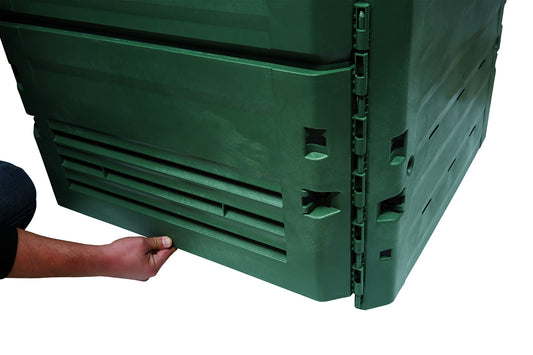
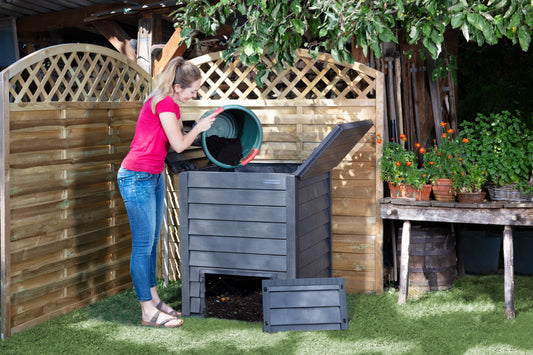
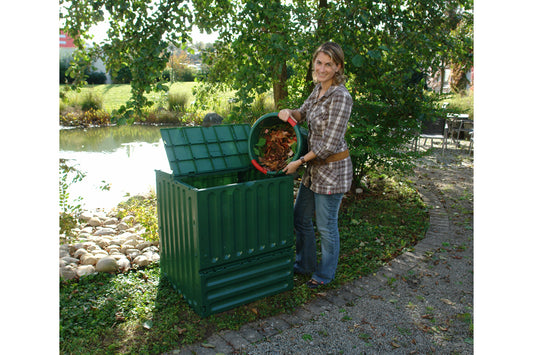
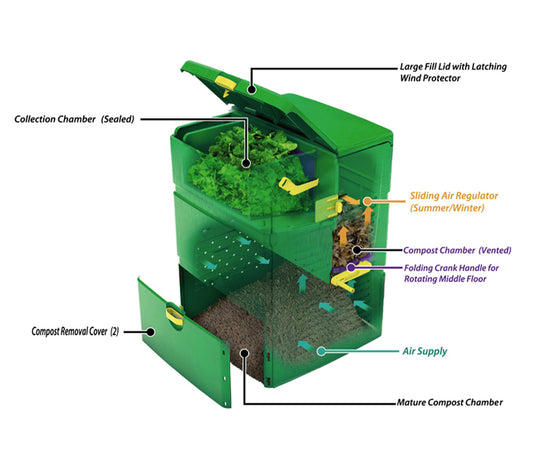
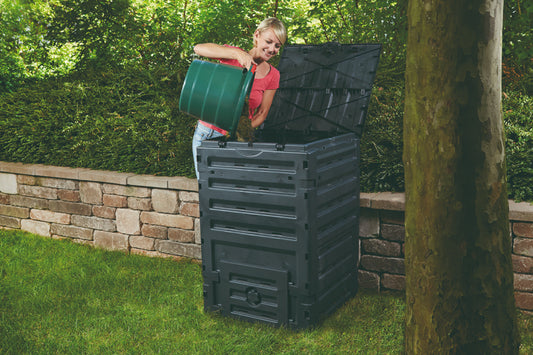
Stationary bins sit directly on the ground and typically hold more volume. They're the better choice if you're processing a lot of yard waste such as fall leaves, garden trimmings, larger volumes of kitchen scraps. And they don't mind a slower, lower-maintenance pace. Many stationary designs in our collection use passive aeration panels or vents built into the walls, so you're not turning the pile by hand at all.
Neither is objectively better, it's a question of volume and how involved you want to be.
Capacity: How Much Are You Composting?
Bin capacity in our collection ranges from compact tumblers sized for a small household's kitchen scraps up to large-capacity stationary bins built for a full yard's worth of leaves and garden waste. Check the capacity listed on each product page against how much waste your household actually generates — an undersized bin fills and stalls, while an oversized one just takes longer to fill and turn over.
Pest Resistance and Odor Control
This is where a lot of composting attempts go wrong. A poorly sealed bin invites rodents and produces the sour smell that makes neighbors complain. Look for solid, enclosed wall panels rather than open wire construction, tight-fitting lids, and a base design that doesn't leave gaps at ground level. Every bin in this collection is chosen with that in mind, it's a big part of why we carry the models we do.
Aeration and Why It Matters
Compost needs oxygen to break down efficiently; without it, the pile turns anaerobic, slows down, and starts to smell. Tumblers solve this by letting you physically turn the whole drum. Many of our stationary bins solve it with built-in ventilation panels or aeration channels instead, so air reaches the pile passively. Either approach works, the wrong bin for your habits is what causes problems, not the aeration method itself
Composting on the Front Range
Why an Enclosed Bin Works Better in Colorado's Dry Climate
Colorado's low humidity pulls moisture out of an open compost pile fast, which slows decomposition and makes an uncovered heap harder to manage than it would be in a wetter climate. An enclosed bin holds moisture in far better, which means less watering and a pile that actually breaks down instead of drying out and sitting there.
Composting Through a Colorado Winter
Composting doesn't have to stop when it gets cold. A well-insulated, enclosed bin retains heat from the decomposition process itself, which keeps things active well past the point an open pile would freeze solid. If you're composting year-round, look for a design with solid insulated walls rather than an open wire frame — that difference matters far more in a Front Range winter than it would somewhere milder.
Bring Professional-Grade Composting to Your Backyard
Because your garden deserves nothing less than the best. Every bin here is carefully selected for quality, performance, and durability, not just the cheapest option that happens to hold waste. We're a family-owned business in Golden, Colorado, and we choose products that work hard, require minimal maintenance, and actually deliver the rich, organic soil you're composting for.