Table of Contents
- What "Falling Apart" Actually Looks Like
- Why Greenhouses Fall Apart. It's Usually Not the Part You'd Expect
- The Spec Red Flags That Predict Failure
- The Kits We Actually Recommend
- The Part Almost Everyone Skips: Foundation and Installation
- Why Buying From Us Protects You From the "Falls Apart" Outcome
- Ready for a Greenhouse That Lasts?
- FAQs
Search "best backyard greenhouse kits" and you'll get a dozen affiliate listicles ranking kits nobody writing the article has ever actually built. We come at this differently. We deliver, assemble, and install greenhouses across Colorado and we're the ones who get the call when a cheap kit starts falling apart. So we know exactly how these structures fail, why, and which ones are still standing after ten Front Range winters.
If you want a greenhouse that lasts instead of one that becomes a repair project, here's what we've learned.
What "Falling Apart" Actually Looks Like
When a backyard greenhouse fails, it's rarely all at once. It's a slow accumulation of problems we see over and over:
- Panels that yellow, cloud, and go brittle from UV exposure, then crack, especially thin or low-quality polycarbonate.
- Hail damage - cracked, punctured, or shattered panels after a single Colorado storm.
- Leaks - water finding its way through overlapping glass panes held together with flimsy clips, or through gaps where panels have shifted.
- Frames that bend, rack, or twist in wind until nothing lines up anymore.
- Connectors that snap - often the cheap plastic joints holding the whole thing together.
- Doors that sag out of square and stop closing properly.
- Hardware that rusts and stains, then seizes or fails.
Any one of these can turn a greenhouse into a headache. The good news: almost all of them are predictable from the specs before you buy.
Why Greenhouses Fall Apart. It's Usually Not the Part You'd Expect
Here's something most buyers get wrong: they obsess over the panels and ignore the frame and connections, when the connections are usually what fail first.
Under a snow load, the weak point is rarely the panel itself, it's the roof bar, the joints, the corner connections, and where the structure attaches to its base. Snow doesn't just fall; it sits, compacts, gets heavier (wet snow is brutal), and pushes on the frame in ways a flimsy structure was never engineered to carry.
In wind, failure is a chain reaction: a light-gauge frame racks side to side, weak connectors give, loose panels lift, and doors flex until a gust finds the weakest link. This is why frame material alone tells you nothing. A thin-gauge aluminum frame with plastic connectors will fail where a heavy-gauge frame with solid metal connections holds. Engineering and connection quality matter more than the word "aluminum" on a spec sheet.
And often the greenhouse itself survives while the foundation fails - the whole structure shifts, slides, or lifts because it was never properly anchored. More on that below, because it's the single most overlooked factor.
The Spec Red Flags That Predict Failure
You can spot a greenhouse that will fall apart before you ever click "buy." Watch for these:
- Polycarbonate 6mm or thinner. Thin panels flex, pop out of their channels in wind, insulate poorly, and yellow and crack sooner. Many budget and big-box kits use 4mm or 6mm to hit a low price. For Colorado, we recommend 8mm twin-wall at minimum. Ideally 10mm, or 16mm triple-wall for year-round growing.
- "Polycarbonate" with no thickness or wall-count listed. If a listing does not tell you the millimeter rating and whether it's twin-wall or single-wall, assume the worst and ask or walk.
- Cheap glass. The bargain standard is 3mm horticultural (annealed) glass. It shatters into dangerous shards and is usually cut into small overlapping panes held with spring clips, which is exactly where leaks and blow-outs start. Real tempered safety glass, ideally 4mm, is a different animal.
- Thin-gauge aluminum frames and plastic connectors. The stuff that racks and snaps.
- No published snow-load or wind rating. If the manufacturer won't commit to a number, it's because the number isn't good.
- A vague or short warranty. A company that builds things to last will stand behind them in writing.
New to all this? Our first-time greenhouse buyer's guide walks through each of these red flags in more depth before you buy.
Janssen Jr Victorian Urban Greenhouse
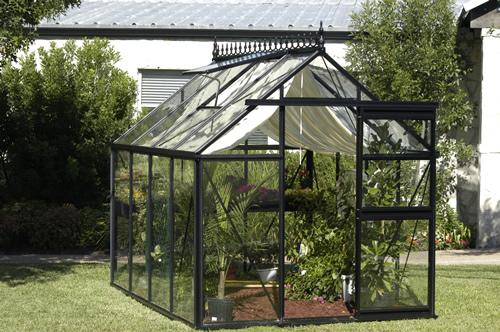
$8,799.00
Janssens Junior Victorian Greenhouse – Compact, Durable & Timeless The Janssens Junior Victorian Greenhouse, available from South Table Sheds, offers a classic English-style design in a space-efficient footprint, perfect for gardeners with a compact space seeking elegance without compromising on… read more
The Kits We Actually Recommend
These are the lines we sell, install, and stand behind — chosen because they don't come back to haunt us (or our customers):
Exaco Riga (our top pick for Colorado weather). German-engineered by Hoklartherm, the Riga greenhouses use 8mm and 10mm twin-wall polycarbonate (16mm triple-wall on the XL) on a heavy anodized aluminum frame. The gothic-arch shape sheds snow and deflects wind instead of fighting it, and they carry serious snow-load ratings. Our customer reviews — sourced from Exaco with permission — document Rigas coming through heavy snow and hail that would have wrecked a bargain kit. When someone in snow or wind country asks what won't fall apart, this is the first thing we point to.
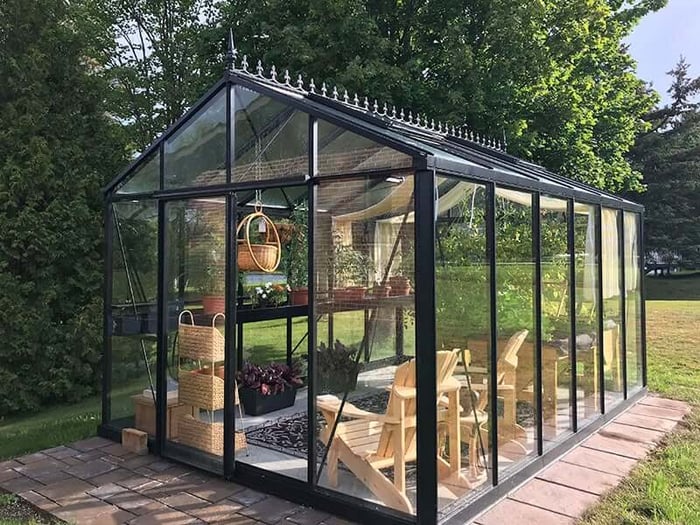
Janssens (the glass option done right). If you want the classic glass greenhouse look, Janssens is how to get it without the cheap-glass failure modes. These Belgian-made greenhouses pair real tempered safety glass with a sturdy aluminum frame — a premium, long-lasting structure rather than clip-together horticultural glass that leaks and shatters.
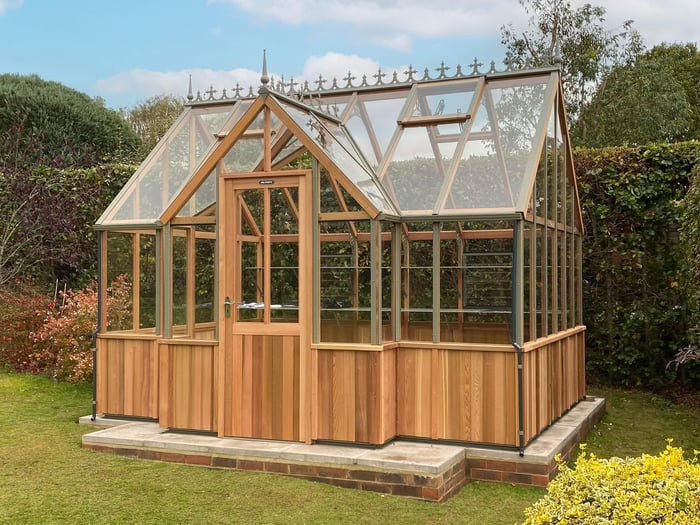
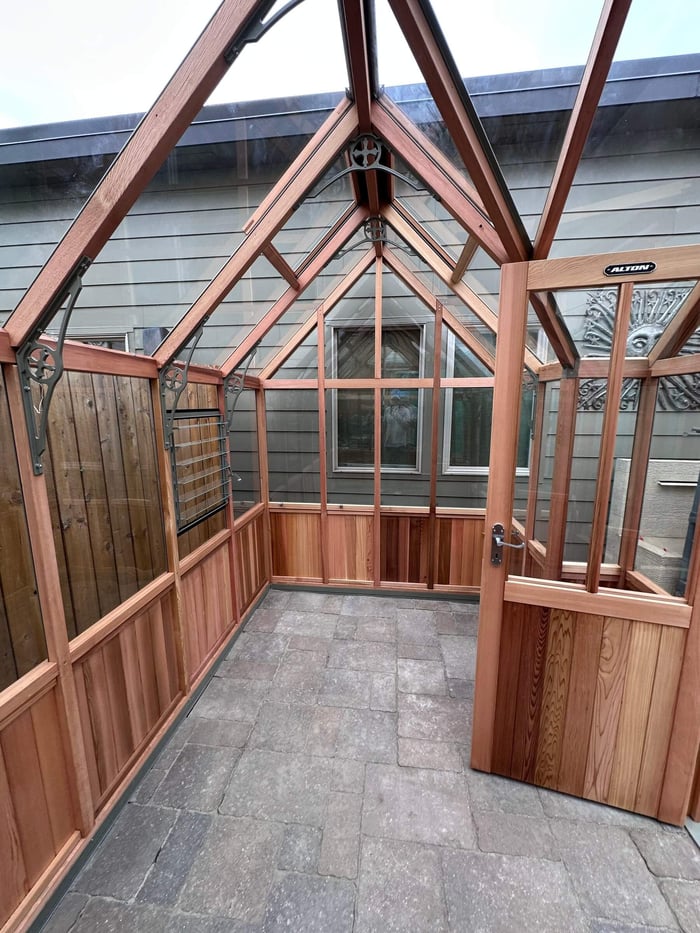
Alton Cedar (the heirloom choice). For buyers who want warmth and beauty over aluminum, Alton's Western red cedar frames are naturally rot- and weather-resistant and, paired with toughened glass, make a genuinely heirloom-grade greenhouse built to be handed down, not replaced.
Alton Octagonal Wooden Greenhouse Kit

$19,250.00
Alton Octagonal Wooden Greenhouse Kit Elegant Design & Superior Craftsmanship Sold by South Table Sheds Free Shipping (lower 48 states) Authorized Retailer The Alton octagonal wooden greenhouse kit offers a stunning blend of modern elegance and practicality, making it the… read more
The Part Almost Everyone Skips: Foundation and Installation
Here's the hard truth we run into constantly: even the best greenhouse kit will fail if it's set on an unlevel base or isn't properly anchored. In high-wind areas, the foundation is critical. As we covered, many "greenhouse failures" are really foundation failures, where the structure lifts or shifts because it was never tied down.
And this is exactly where most buyers cut the corner. A proper foundation is labor-intensive and adds cost, so people skip it, set the greenhouse on bare or uneven ground, and hope for the best. Then the first real windstorm turns that shortcut into damage. A level, anchored foundation, a foundation frame, a proper pad, concrete where needed isn't the boring part of the project. It's the part that determines whether your greenhouse is still standing in five years.
Why Buying From Us Protects You From the "Falls Apart" Outcome
You can order a greenhouse in a box from Amazon or a big-box store. What you can't get from them is anyone making sure it actually lasts. Here's what we do differently:
- A site visit to match you to the right greenhouse, and the right foundation, for your space, your goals, and Colorado's weather.
- Delivery and shipment inspection, so freight or hail-in-transit damage is caught on arrival, not discovered by you halfway through assembly.
- Professional installation on a proper foundation — the single biggest factor in whether a greenhouse holds up.
- The whole workflow, start to finish, instead of leaving you alone with a pallet and a 200-page manual.
A greenhouse is an investment meant to last for decades. The difference between one that does and one that "falls apart" usually isn't luck, it's the kit, the foundation, and the install, done right.
Ready for a Greenhouse That Lasts?
At South Table Sheds, greenhouses are what we do and we only sell the ones we'd want standing in our own backyard through a Colorado winter. Reach out to schedule a site visit, and we'll help you choose a greenhouse built to last, put it on a foundation that keeps it there, and stand behind it start to finish.
FAQs
What's the most durable backyard greenhouse kit?
For Colorado's snow, wind, and hail, our top pick is the Exaco Riga line. Thick twin- and triple-wall polycarbonate on a heavy aluminum frame, in a shape built to shed weather. For glass, Janssens; for cedar, Alton.
What polycarbonate thickness won't fall apart?
At least 8mm twin-wall, and confirm it's twin-wall, not single. Steer clear of the 4–6mm panels common on budget kits, they flex, dislodge, and degrade faster.
Is glass or polycarbonate more durable?
For impact and hail, polycarbonate wins easily. Glass can last a lifetime if it's real tempered safety glass on a quality frame but cheap 3mm horticultural glass shatters and leaks. Avoid the cheap stuff either way.
Do cheap greenhouses really fall apart in Colorado?
Regularly. Between hail, chinook winds, and heavy wet spring snow, our climate finds every weak point a bargain kit has. Building for real weather from the start is far cheaper than replacing a failed greenhouse.
Ready for a Greenhouse That Lasts?
At South Table Sheds, greenhouses are what we do and we only sell the ones we'd want standing in our own backyard through a Colorado winter. Reach out to schedule a site visit, and we'll help you choose a greenhouse built to last, put it on a foundation that keeps it there, and stand behind it start to finish.