Table of Contents
We sell, deliver, and install greenhouses which means we have similar conversation with first-time greenhouse buyers just about every week. Our customers are all over the map: retirees who finally have time to garden, folks determined to keep tropical plants alive through a Front Range winter, and people who've worked hard and are ready to treat themselves to the greenhouse they've always wanted. Different goals, but almost all of them arrive with the same questions and, too often, the same avoidable mistakes.
Here's the honest version.
Buying Too Small
If we could put one sentence on a billboard for first-time buyers, it would be this: you will wish you'd gone bigger. It's the single most common regret we hear. A greenhouse fills up faster than anyone expects with benches, seed trays, pots, bags of soil, watering cans, and then the plants themselves. What looks generous on a website feels cramped by the second season.
The fix isn't just "buy the biggest one." It's buying the right size for how you actually want to use it and that's genuinely hard to eyeball from a product page. It's why we come out and do a site visit before most of our customers buy. Standing in your yard, we can talk through your wish list, see your sun and your slope, and match you to a size and style that fits both your space and your ambitions. It's a lot easier to get this right once than to outgrow it in a year.
The Polycarbonate Question Most Buyers Don't Know to Ask
This is where first-time buyers get quietly burned, because most people don't know there are actually two questions to ask about the glazing, not one:
- Is it twin-wall (or triple-wall) — or single-wall?
- How many millimeters thick is it?
"Polycarbonate" by itself tells you almost nothing. Single-wall panels are cheap and barely insulate. Twin- and triple-wall panels have hollow air channels between the layers and that trapped air is the whole point. It's what holds heat overnight, smooths out temperature swings, and cuts your heating costs dramatically compared to a single layer.
Then there's thickness, and this is where a lot of budget kits cut corners. Many popular greenhouse kits top out at 4mm or 6mm polycarbonate, and to be fair, that's fine for a mild climate or seasonal growing. But those thin panels lose heat quickly and offer less protection against impact and snow load. The insulation difference is real and measurable: a 4mm panel sits around R-1.4, 8mm climbs to roughly R-1.7, and a premium 16mm triple-wall pushes toward an R-value near 3.0. Thicker panels also stand up far better to hail and heavy snow.
Our recommendation for Colorado or Colorado like conditions, is at least 8mm twin-wall, ideally 10mm or the 16mm triple-wall for true year-round growing. The only thing you give up going thicker is a sliver of light transmission (thinner panels let through maybe 5–10% more raw light), and twin-wall's diffused light is actually better for most plants anyway because it spreads evenly instead of scorching hot spots.
So when a listing just says "polycarbonate" with no wall count and no millimeter rating, that's your signal to ask both questions or to walk.
Riga 4 Greenhouse Kit | 135 sq. ft.

$8,099.00
What's Included? Every Riga 4 Greenhouse Kit ships as a complete kit: All polycarbonate panels (8mm sides, 10mm gable ends) Complete aluminum frame with all extrusions and connectors Barn-style hinged door with upgraded handle and key lock (30" W x… read more
Glass vs. Polycarbonate: When Each Makes Sense
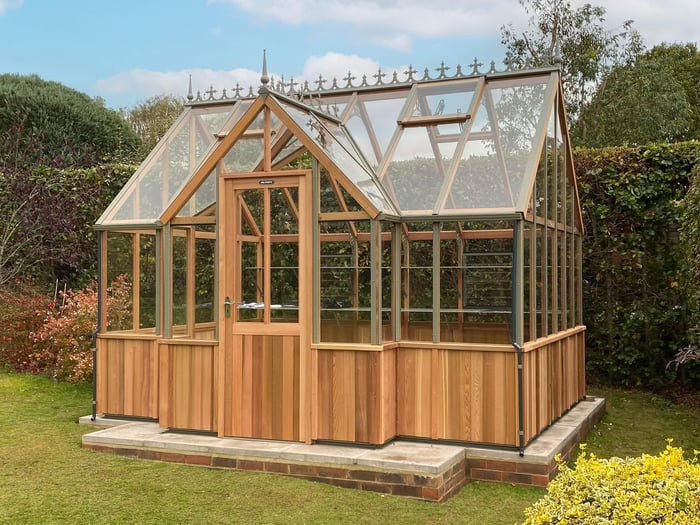
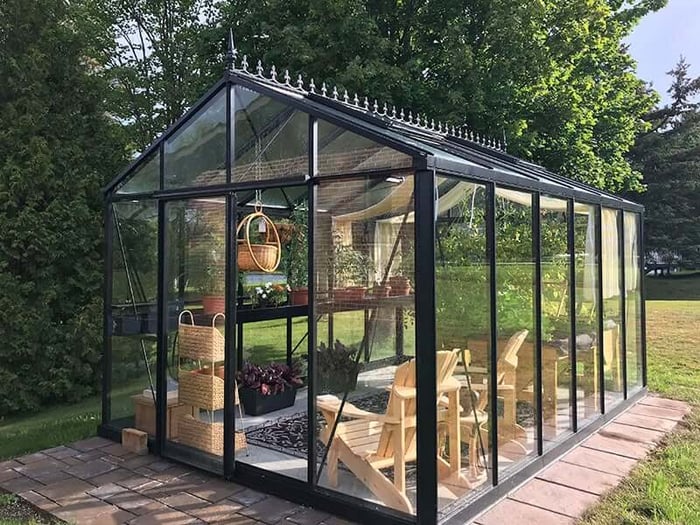
Glass is beautiful, and for some buyers it's the right call. If your greenhouse is as much about the look of your property as it is about production, and you're not fighting hail and heavy snow, a glass greenhouse can be a stunning centerpiece.
But for most first-time growers, especially in a place like Colorado, twin-wall polycarbonate is the more forgiving choice. It insulates better, diffuses light evenly, shrugs off hail that would shatter glass, and costs less to frame because it's so much lighter. Our simple rule of thumb: buy glass for aesthetics, buy polycarbonate for performance. In snow and wind country, that usually points to polycarbonate.
Ventilation, Heating & Cooling: It's Not an Exact Science
Here's the part nobody wants to admit in a sales pitch: managing the climate inside your greenhouse is not an exact science. It depends on what you're growing, what season it is, where your greenhouse sits, and how much sun it catches. Everyone's setup is a little different, and the best growers get there through some trial and error.
A greenhouse doesn't regulate itself. On a sunny day it can rocket past 100°F, and on a clear night it can shed that heat just as fast. The good news is you have options in both directions, and plenty of them don't require electricity at all, which matters, because a lot of automated ventilation systems (powered intake shutters, exhaust fans, thermostats) run on 110V power your greenhouse site may not have.
Cooling in summer
Roof and side vents for cross-ventilation, automatic vent openers that run on a wax cylinder (no power needed), shade cloth for the intense July and August sun, and misting to knock temperatures down. A solar-powered exhaust fan is often the best option if you want powered airflow without running electrical service.
Heating in winter
This is where thick twin- or triple-wall polycarbonate pays you back, holding daytime warmth into the night. Add thermal mass, a few barrels of water soak up sun during the day and release it after dark, and a small heater to bridge the coldest nights if you want to grow straight through.
The specifics will be yours to dial in, and that's greenhouse gardening.
Hail, Wind & the Foundation That Keeps It Standing
Because we are located in Colorado, hail and wind come up in almost every conversation. We sit in "Hail Alley," and the foothills see winds that flatten flimsy structures.
On hail, this is one more reason we lean on the Riga greenhouses: they've come through plenty of serious hailstorms, as our customer reviews attest. Twin- and triple-wall polycarbonate absorbs impact that would shatter glass or puncture a thin panel.
On wind, two things matter. First, the frame and shape are important. A heavy-gauge aluminum frame with sloped or curved walls sheds wind and snow rather than fighting them. Second, and the step first-timers skip most: the foundation. In a windy spot, your base is what keeps the whole structure planted. For the Riga greenhouses we install, we use a foundation frame designed for exactly this. Whatever greenhouse you choose, ask what base and anchoring options it offers before you buy, setting a greenhouse on bare soil with a few stakes is asking for trouble the first time the wind really kicks up.
What Makes Buying From Us Different
You can order a greenhouse in a box from a big-box store or an online-only retailer. What you can't get from them is a partner for the whole process, and for a first-time buyer, that's often the difference between a smooth project and a frustrating one. Here's what we do that others don't:
We come out for a site visit
To help you choose the right greenhouse for your space, your goals, and your climate, before you spend a dime.
We're there for delivery
We inspect the shipment on arrival, so any freight damage is caught immediately, not discovered halfway through your own assembly.
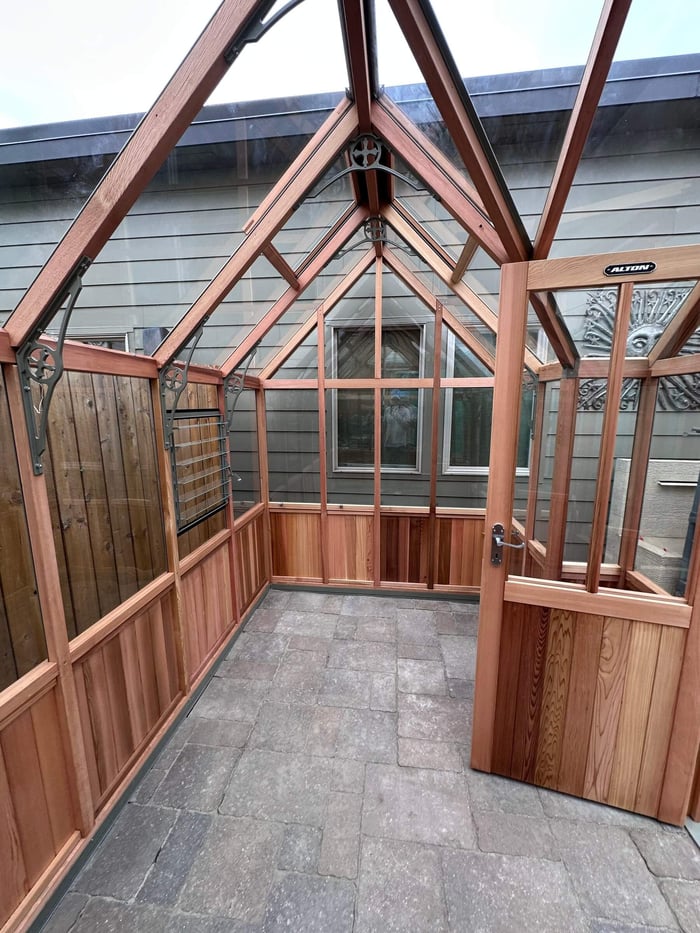
We install greenhouses
No wrestling with a 200-page manual and a pile of aluminum extrusions in your driveway.
We handle the whole workflow, start to finish
From choosing, to delivery, to install, instead of leaving you on your own the moment the truck pulls away.
For a lot of our customers, that end-to-end support is the whole reason they buy from us. A greenhouse is an investment meant to last for years. It's worth getting right.
Ready to Choose Your First Greenhouse?
At South Table Sheds, greenhouses are what we do. We'll help you sort through the options and choose the right one for your space, your goals, and Colorado's weather, then inspect the shipment when it arrives, and install it for you. From the first "which one do I even need?" to the day you're standing inside it, we handle the whole process, so you get your first greenhouse right the first time. Reach out to schedule a site visit and let's get started.
FAQs
What size greenhouse should a beginner get?
Bigger than you think. Most first-timers outgrow a small greenhouse within a season or two. Better yet, have someone help you size it to how you'll actually use it, that's what our site visits are for.
How thick should the polycarbonate be?
For more extreme climates such as Colorado, we recommend at least 8mm twin-wall, and 10mm or 16mm triple-wall for year-round growing. And always confirm two things: that it's twin-wall (not single), and the millimeter rating. Many budget kits use just 4–6mm.
Is polycarbonate or glass better for a first greenhouse?
For most beginners, twin-wall polycarbonate is preferred because insulates better, diffuses light evenly, handles hail, and costs less to frame. Glass is a great option if you're buying primarily for looks and aren't battling hail and heavy snow.
Will a greenhouse survive Colorado hail and wind?
It can if you choose the right one and anchor it properly. Thick twin- or triple-wall polycarbonate handles hail, a heavy-gauge aluminum frame resists wind, and a proper foundation keeps the whole structure in place.
Ready to Choose Your First Greenhouse?
At South Table Sheds, we specialize in polycarbonate greenhouse kits built to handle real Colorado weather, including the German-engineered Exaco Riga line, with heavy twin- and triple-wall glazing and reinforced aluminum frames made for hail, wind, and snow. Reach out to schedule a site visit, and we'll help you get your first greenhouse right the first time, from choosing it to standing it up in your yard.