Table of Contents
If you're searching for a straight answer to this question, here it is: a backyard studio in Colorado typically costs between $15,000 and $75,000 or more, all in. That's a wide range, and for good reason. The right number for your project depends on size, finish level, site conditions, and a set of Colorado-specific factors that most out-of-state cost guides simply don't account for.
After 17 years of building custom structures, we've watched homeowners underestimate their budget more times than we can count. Not because they didn't do their research, but because they were looking at the wrong numbers. This guide will give you an honest, ground-level breakdown of what a backyard studio actually costs to build in Colorado, and why.
The Real Cost Breakdown for a Backyard Studio
The most common mistake is budgeting for the structure alone and forgetting everything else. A backyard studio is not just a box delivered and dropped in your yard. It requires a proper foundation, utility connections, permits, and finish work. Here's how the costs stack up across each category:
The Structure: $10,000–$45,000+
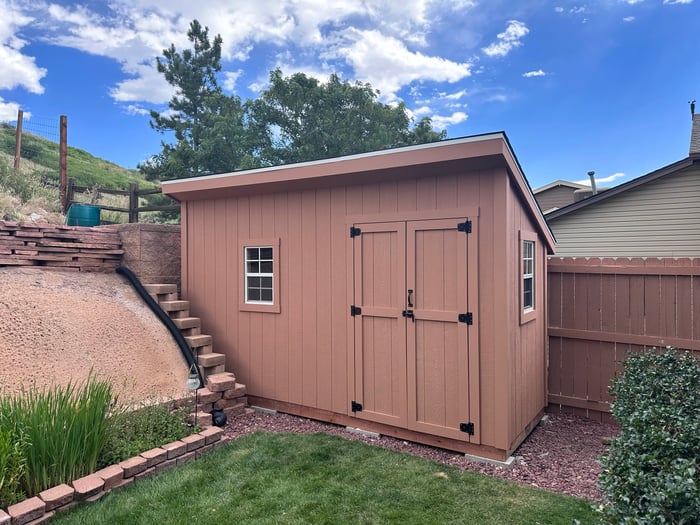
The structure itself is your single largest line item. Prefabricated studio kits, the kind you configure online and have shipped to your door, generally start around $10,000–$15,000 for a basic shell in the 100–120 square foot range. Fully designed, customized prefab options from Colorado-based manufacturers run $120–$320 per square foot for the product alone, meaning a 200 square foot studio can cost $24,000–$64,000 before you've broken any ground.
Custom-built studios, constructed on-site by a local contractor, are priced by the project rather than per square foot, and costs vary based on materials, design complexity, and finish level. The advantage of going custom in Colorado is that you're working with someone who understands local code requirements from the start, snow loads, frost depth, hail-resistant materials, rather than discovering them after you've already purchased a kit.
Foundation: $1,500–$5,000+
Colorado's climate demands more from a foundation than most other parts of the country. The frost line across the Front Range sits at 36 inches, and in mountain communities it can reach 42 inches or deeper. This means your footings need to go further down than a standard concrete pad used in warmer climates, and that costs more.
Your foundation options include concrete piers, a poured perimeter foundation, or a concrete slab. The right choice depends on your soil type, the size of the structure, and local code requirements. In the Denver metro area, expansive clay soils are common and can shift with moisture changes, making proper foundation design especially important. Budget at minimum $1,500 for a simple gravel and skid foundation on a small structure, and $3,000–$5,000 or more for a poured concrete slab on a larger build.
Permits: $200–$3,000+
One of the most Colorado-specific factors in your budget is permitting. The good news: structures under 120 square feet are exempt from building permits in many Colorado jurisdictions, which is exactly why 10×12 and similar sizes are so popular here.
The moment you go over that threshold, permit requirements kick in. In Denver, residential building permits for accessory structures typically run $200–$2,000 depending on the project's valuation. Electrical and mechanical permits are separate and add to that total.
In mountain communities, Eagle County, Summit County, Pagosa Springs, and others, the requirements become more rigorous. Many of these jurisdictions require structural drawings wet-stamped by a Colorado-licensed engineer, which can add $1,000–$3,000 to your project before a single nail is driven. If you're building at elevation or in an HOA, plan for permitting to be both more complex and more expensive than the Front Range baseline.
Utilities: $5,000–$12,000
This is the category that surprises most people. Running utilities to a detached backyard structure is a meaningful project in its own right.
Electrical: Trenching and running conduit from your main panel to the studio, plus installing a subpanel in the studio, typically costs $2,000–$5,000 depending on the distance from your house and local labor rates. If you want to run anything beyond basic lighting and a few outlets such as a mini-split, a space heater, a kiln, recording equipment, you'll want to properly size this from the start. Adding circuits later is expensive.
Heating and cooling: Colorado's climate swings are real. Summer afternoons at elevation can hit 90°F, and winter nights regularly drop well below zero. If you want to use your studio year-round — and most people do — budget $2,500–$5,000 for a mini-split system, which handles both heating and cooling efficiently. Electric baseboard heat is cheaper to install but more expensive to operate long-term.
Plumbing: Adding a sink or bathroom to a backyard studio is entirely possible, but it requires a licensed plumber and can add $5,000–$15,000 or more depending on the complexity of the hookup. Most clients skip plumbing entirely and install only electrical, which is a reasonable choice for office, art studio, or gym uses.
Insulation and Interior Finish: $3,000–$15,000+
A shell without insulation is a seasonal space. In Colorado, that means four to five months of useless square footage. Proper insulation, spray foam or batt insulation with a vapor barrier, runs $1,500–$4,000 depending on size and R-value targets.
Interior finish choices vary enormously. A basic interior with drywall, paint, and luxury vinyl plank flooring is a very different budget than a fully finished space with trim work, built-in cabinetry, and custom lighting. Plan for $3,000 on the low end for a simple DIY-friendly finish, and $15,000+ for a fully turnkey interior.
Colorado-Specific Cost Factors You Can't Ignore
Snow Load Engineering
Colorado structures are subject to some of the highest snow load requirements in the continental United States. On the Front Range, design roof snow loads are typically 30 PSF or more. In mountain communities like Pagosa Springs, ground snow loads can reach 93 PSF. A structure engineered for Tennessee or Georgia simply isn't built for this environment. If you're purchasing a prefab kit, verify that it meets Colorado's snow load requirements for your specific location — and get that in writing.
Hail
The Denver metro leads the nation in hail claims. A backyard studio built with standard asphalt shingles and polycarbonate windows may look great on day one and require significant repairs within five years. Impact-resistant roofing materials and tempered glass add to the upfront cost but pay for themselves quickly in a Colorado hailstorm.
UV Degradation at Altitude
Colorado receives more solar radiation than virtually anywhere else in the lower 48. At 5,000–8,000 feet of elevation, UV exposure accelerates the breakdown of plastics, finishes, and lower-grade building materials. Specify exterior materials rated for high-UV environments such as James Hardie siding, treated wood, quality exterior paint, and budget accordingly.
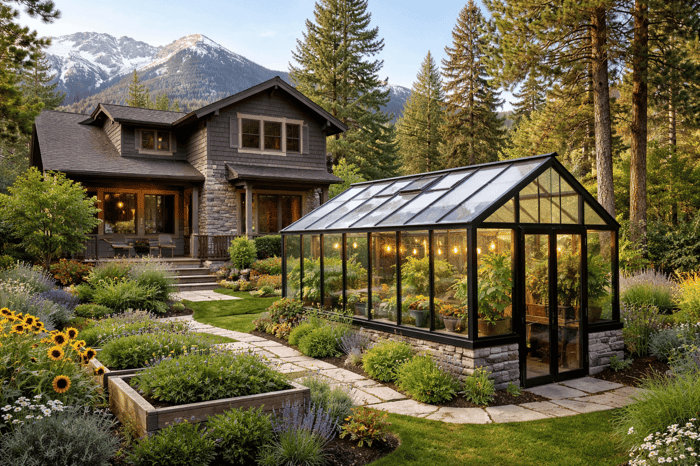
Janssen Royal Victorian Greenhouse Glass or Hybrid

$9,799.00
Janssens Royal Victorian Greenhouse Glass or Hybrid Classic Design, Superior Durability Offered by South Table Sheds Free Shipping Authorized Dealer The Janssens Royal Victorian Greenhouse, available from South Table Sheds, is a standout choice for gardeners seeking both functionality and… read more
Real-World Budget Scenarios
To make this concrete, here are three realistic project profiles we see regularly on the Front Range:
Basic Home Office, 120 sq ft, Denver Suburb
Structure + foundation + electrical: $18,000–$25,000
No permit required. Basic insulation. Simple interior. This is the entry-level backyard studio that works for focused daily use.
Finished Artist or Yoga Studio, 150 sq ft, Denver Metro
Structure + foundation + permits + electrical + HVAC + finished interior: $35,000–$50,000
Year-round comfort, purpose-built finish work, proper permitting. This is the most common project profile.
Premium Home Office / ADU, 200+ sq ft, Front Range
Full build-out, all utilities, premium materials, engineered to code: $55,000–$80,000+
Suitable for daily professional use, potential rental income, maximum property value impact.
Does a Backyard Studio Add Value?
In the Front Range market, the answer is yes, consistently. Industry data suggests backyard studios and ADUs appraise at roughly 1.5 times their retail cost when a property is sold. One homeowner in Colorado recently reported that their Studio Shed addition contributed an estimated $150,000 to their final sale price. While results vary based on the quality of the build and neighborhood comparables, a well-constructed, properly permitted backyard studio is among the highest-returning improvements a Colorado homeowner can make.
What Most People Get Wrong
The biggest misconception we encounter is that the kit price is the project price. It isn't. For a fully finished, usable backyard studio in Colorado, the kit or structure typically represents 40–60% of the total project cost. Foundation, utilities, permits, and finish work make up the rest.
The second most common mistake is building without understanding local permitting requirements. An unpermitted structure over 120 square feet can complicate a home sale, result in fines, or require costly retrofits to bring up to code.
If you're planning a backyard studio on Colorado's Front Range, start with a conversation with someone who builds here. The climate, the soil, the codes, and the hail are not details, they're the project.
---
South Table Sheds has been building for over 17 years. Contact us to discuss your project.
FAQs
What is the average cost of a backyard studio in Colorado?
In Colorado, most homeowners spend between $15,000 and $75,000 for a completed backyard studio, depending on size, finish level, and utility connections. A basic 120 square foot shell with electrical runs $18,000–$25,000. A fully finished, year-round studio with heating, cooling, and a polished interior typically falls in the $35,000–$55,000 range. Premium builds with ADU-level finishes and all utilities can exceed $75,000. The most important thing to understand is that the structure itself is only part of the cost. The foundation, permits, utilities, and finish work typically add 40–60% on top of the kit or build price.
Do I need a building permit for a backyard studio in Colorado?
It depends on size and your specific jurisdiction. In many Colorado municipalities, structures under 120 square feet do not require a building permit, which is why that size range is so popular. Once you exceed 120 square feet, building permits are generally required, along with separate electrical and mechanical permits. In Denver, permit fees for residential accessory structures typically range from $200 to $2,000. In mountain communities like Eagle County or Summit County, requirements are more rigorous and often include engineered structural drawings stamped by a Colorado-licensed engineer, which can add $1,000–$3,000 to the project. Always verify requirements with your local building department before you begin, an unpermitted structure can complicate a future home sale or result in costly code compliance issues.
How does Colorado's climate affect the cost of building a backyard studio?
Significantly! And in ways that out-of-state cost guides rarely address. Colorado's frost line on the Front Range sits at 36 inches, requiring deeper footings than warmer climates and adding $1,500–$3,000 to foundation costs. Snow load requirements vary by location but can reach 93 PSF in mountain communities, meaning structures must be engineered accordingly. Hail is a serious factor in the Denver metro, making impact-resistant roofing a practical necessity rather than an upgrade. High-altitude UV exposure also accelerates the breakdown of lower-grade exterior materials, pushing buyers toward more durable options. Accounting for these factors upfront results in a studio that lasts; ignoring them results in costly repairs within a few years.
What's the most cost-effective size for a backyard studio in Colorado?
For most homeowners, 120 square feet is the sweet spot. It's large enough to function as a comfortable home office, art studio, or fitness space, and in many Colorado jurisdictions it falls below the threshold that triggers building permit requirements, a meaningful cost and time savings. If your use case requires more space, 150–200 square feet is the next most common range, offering a noticeably larger footprint while still keeping the project manageable. Going beyond 200 square feet starts to involve more complex permitting, larger utility hookups, and higher structural engineering requirements, all of which increase the total project cost substantially.
Does a backyard studio add value to my home in Colorado?
Yes, and the return is strong relative to other home improvements. In the Front Range market, well-constructed backyard studios and ADUs have historically appraised at approximately 1.5 times their retail cost when a property is sold. That means a $40,000 studio can contribute $60,000 or more in appraised value. The key factors are build quality, permitting (unpermitted structures are discounted or excluded from appraisals), and how well the space functions for a prospective buyer. Studios that can serve as a home office, guest suite, or income-generating rental unit tend to command the strongest returns in today's Colorado market.