Table of Contents
If you've been Googling "how much do cold frames cost," you've probably noticed the answers vary wildly, anywhere from $15 to $500+. That range isn't wrong, but it's not very helpful either. The real answer depends on what type of cold frame you're looking at, what materials it's made from, and what you actually need it to do.
At South Table Sheds, we carry a curated selection of Juwel cold frames made in Austria, which is one of the most respected European cold frame brands. We've spent time learning what separates a cold frame worth buying from one you'll regret. Here's our honest breakdown.
The Short Answer: What Do Cold Frames Cost?
A well-constructed cold frame kit typically runs around $90 but that's the entry point for basic aluminum-frame models. Here's a more useful breakdown by tier:
Budget / DIY: $15–$75 A truly DIY cold frame built from basic materials can cost as little as $10–$20. Think scrap lumber, PVC pipe, and greenhouse plastic. These work, but durability and heat retention are limited. With do-it-yourself supplies, simple cold frames can be free or cost up to $50 or more depending on size and whether recycled materials are used.
Mid-Range Kits: $75–$250 This is where most buyers land. At retailers like Home Depot, cold frame kits start around $74 and run up to about $139 for basic models. These are typically aluminum-framed with polycarbonate panels. Functional, but lightweight.
Premium Kits: $229–$534 This is the range we sell and for good reason. Our Juwel cold frames run from $229 to $534 and are built to a significantly higher standard. Here's what's in our lineup:
- Juwel Double Cold Frame Greenhouse – $229
- Juwel Mini-Greenhouse Cold Frame – $229.99
- Juwel Polycarbonate Cold Frame – $239
- Juwel Cold-Frame Kit BioStar 1500 – $534
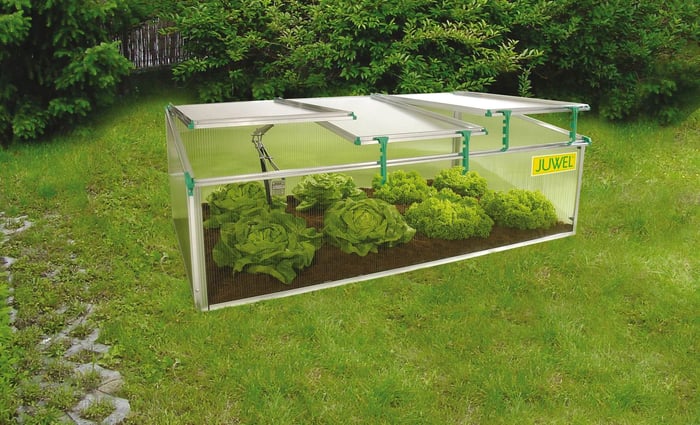
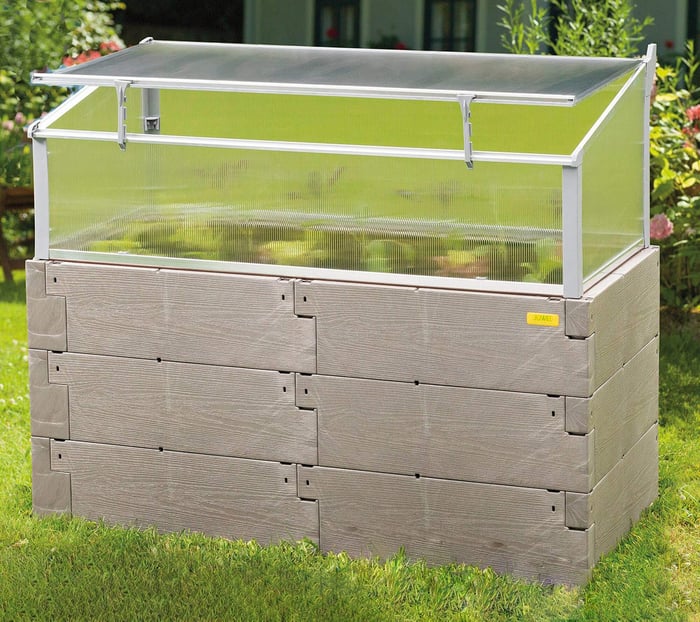
The BioStar 1500 is our flagship model. It uses 8mm twin-wall polycarbonate panels, the same thickness used in full-sized greenhouses, providing superior heat retention compared to an ordinary glass cold frame box. First assembly takes about an hour, and it can be broken down in just five minutes at the end of the season.
What Drives the Price Up?
Not all cold frames are created equal. Here's what you're actually paying for as you move up in price:
Glazing material is the single biggest cost driver. Glass cold frames tend to be the most expensive and fragile. Polycarbonate is cheaper than glass and lasts longer, though it allows in slightly less light. Aluminum frames are increasingly popular, lightweight and long-lasting, but potentially more expensive than basic models.
Panel thickness matters more than most people realize. A single-wall polycarbonate panel (common in cheap kits) insulates very differently than an 8mm twin-wall panel like the BioStar 1500 uses. Twin-wall panels trap air between layers, dramatically improving overnight heat retention, which is exactly when your plants need protection most.
Frame construction affects both longevity and stability. Wooden frames are strong and provide more consistent temperatures, but require maintenance over time. Lighter aluminum frames may need to be pegged down in windy conditions. Here in Colorado's Front Range, where wind is a real factor, this is worth thinking about carefully.
Size obviously affects price. Larger cold frames cover more growing area but cost more. The BioStar 1500 covers 5 x 3 feet, meaningful growing space for a serious kitchen gardener.
DIY vs. Buying a Kit: The Honest Comparison
It's tempting to DIY a cold frame from salvaged windows and scrap lumber. And honestly, for casual use, that can work fine. A salvaged glass door from a Habitat for Humanity ReStore combined with basic lumber can result in a functional cold frame for well under $50.
But there are real trade-offs:
- Time investment: Building a decent cold frame takes several hours of measuring, cutting, and assembly. A kit like the BioStar 1500 assembles in about an hour.
- Portability: DIY frames are usually heavy and permanent. Quality kits are designed to be moved or disassembled seasonally, critical if you want to rotate crops or store it in summer.
- Insulation: Inexpensive hoop house kits cost at least twice as much as a cold frame kit, meaning cold frames already represent good value for season extension. But cheap DIY materials won't match the insulating performance of engineered twin-wall polycarbonate.
- Appearance: If your cold frame is visible from the house or yard, a purpose-built kit simply looks better.
In Colorado, where we are located, gardeners who want something that can handle late spring snowstorms and windy spring days, a DIY plastic-draped frame typically won't cut it.
Elevated Raised Garden Planter

$199.00
Elevated Raised Garden Planter Space Saving Gardening Solution Dreaming of a garden but stuck with a balcony or small patio? The Elevated Raised Garden Planter from South Table Sheds is your space-saving gardening solution. Whether you’re harvesting crisp greens or… read more
What Do Most People Actually Spend?
Based on market data and what we see in our category, most serious home gardeners spend between $150–$300 on a cold frame. Below that range, you're often getting a product that won't last more than a season or two. Above $300, you're getting into premium territory, longer panels, better insulation, sturdier frames.
Our $229–$239 Juwel models hit that sweet spot for most buyers: professional-grade construction without the top-tier price tag.
Is a Cold Frame Worth the Investment?
A cold frame can extend your growing season by about six weeks in both spring and fall that's six more weeks of fresh lettuce, spinach, kale, arugula, and root vegetables. For Colorado gardeners dealing with late frosts and early snows, that's significant.
The temperature inside a cold frame typically stays 5 to 10 degrees warmer than outside which effectively shifts your growing zone south by several hundred miles. For a deeper look at how glazing affects winter heat retention, see our guide on whether greenhouses stay warm in winter." On Colorado's Front Range, that's the difference between worrying about a late April frost and confidently planting a month earlier.
If you're spending $50–$100 per season on grocery store greens, a $229 cold frame pays for itself in two to three seasons, and keeps performing for years.
What Cold Frames Does South Table Sheds Carry?
We carry Juwel cold frames, an Austrian brand known for engineering quality that matches what you'd find in professional growing operations. All of our models use polycarbonate glazing (more durable and lighter than glass), aluminum or composite frames, and are designed for easy assembly.